

Condom Size: How to Measure Yours and Get the Fit Right
Too tight, too loose: condom size comes down to one number, nominal width. How to measure yours in two minutes, plus a girth to width chart that actually works.

47 to 69 mmnominal widths sold on the market
4.6 inaverage erect girth (2015 review)
0.7% vs 1.4%breakage, fitted vs standard condoms
98% vs 82%effectiveness, perfect use vs typical use
In short
- The number that matters is nominal width, in millimetres. Not length.
- Measure your erect girth at its widest point, then divide by 2.25. That is the width to look for.
- Dividing girth by 3.14, as many guides suggest, gives you a diameter, not a nominal width. Different measurement entirely.
- Too tight means pinching and breakage. Too loose means slipping. Both cost you protection.
- Labels like snug, standard and large are not standardised across brands. Millimetres are.
There is the condom that grips so hard you stop feeling anything and just want it over with. And there is the one that shifts, rides up and slides off. Both lead to the same conclusion: condoms just do not work for me. Nine times out of ten the brand is not the problem and the principle is not the problem. The condom size is. Getting it right takes two minutes, a soft tape measure and one piece of information almost nobody is given: nominal width.
This guide covers how to measure it, how to translate it into the labels on the box, and how to spot a bad fit from the signs your body already gives you. If you want brand by brand widths and thicknesses, our best condoms guide breaks those down. This page is about the measurement.
Nominal width is the only measurement that counts
Turn any box over and look at the small print. European and UK packs usually state something like “nominal width: 52 mm”. That figure is the one to remember, and it is the only one that is defined by a standard. Condoms sold in Europe comply with ISO 4074, which defines nominal width as the width of the condom unrolled and laid completely flat, measured partway down the shaft.
Lay a condom flat and it forms a rectangle whose width is exactly half the circumference of the tube, so a 52 mm condom has a 104 mm circumference. That is where the confusion starts, because 104 mm is not the girth it is meant for: latex has to stretch slightly in order to grip.
Many American brands print snug, standard, large or magnum instead of a number. Those words are marketing, not measurement, and one brand’s large can be another brand’s regular. When the box is vague, look up the product specification sheet on the manufacturer’s site, where the width in millimetres is almost always listed.
The maths mistake that is everywhere
Plenty of articles tell you to divide your girth by 3.14 to get your nominal width. That is simply wrong, and it is easy to check: dividing a circumference by pi gives you a diameter. Applied to a 11.5 cm girth it produces 36 mm, a size that exists on no shelf anywhere.
Others say to divide by 2, which is geometrically correct but misleading in practice. The systematic review published in BJU International in 2015, covering up to 15,521 men, put average erect girth at 11.66 cm, or 4.59 in. Halve that and you get 58 mm, an extra large size, yet most people wear 52 mm without trouble. The gap is elasticity.
The ratio manufacturers actually work to sits between 2.2 and 2.35. Use 2.25: it matches the sizes on the market and leaves the right amount of stretch, the amount that makes a condom stay put without squeezing.
How to measure your condom size in two minutes
You need a soft sewing tape measure, or a strip of paper and a ruler.
- Measure when erect. A flaccid measurement tells you nothing useful.
- Wrap the tape around the shaft at its widest point, usually midway or just below the head. Snug against the skin, not pressing into it.
- Write the number down. That is your girth.
- Divide by 2.25. A girth of 11.5 cm or 4.5 in gives 51 mm. A girth of 12.5 cm or 4.9 in gives 55 mm.
- Buy the nearest available width, then adjust by feel.
There is an even faster route if you already have a box at home. Unroll one condom, lay it flat without stretching it, and measure across it with a ruler. You now know its nominal width to the millimetre, and whether the one you have been using for months was ever your size.
The paper strip trick
- No tape measure? Wrap a strip of paper around, mark the overlap with a pen, unwrap and measure with a ruler. Just as accurate.
- Measure twice, on two occasions. Erections vary, and half a centimetre can move you into another size band.
Condom size chart
Here is how girth maps onto nominal width and onto the words you will see on the packaging.
| Erect girth | Nominal width to target | Usual label |
|---|---|---|
| under 10.5 cm / 4.1 in | 47 to 49 mm | snug, close fit |
| 10.5 to 11.5 cm / 4.1 to 4.5 in | 49 to 52 mm | standard, regular, classic |
| 11.5 to 12.5 cm / 4.5 to 4.9 in | 52 to 56 mm | large, XL |
| over 12.5 cm / 4.9 in | 56 mm and up | XXL, magnum, king size |
Most classic ranges state 52 mm, large ranges 54 or 56 mm, and specialist brands go up to 69 mm. Below 47 mm the market thins out badly: a genuine blind spot, and under 10 cm of girth you will often have to settle for 47 mm and be that much more careful putting it on.
How to tell your condom does not fit
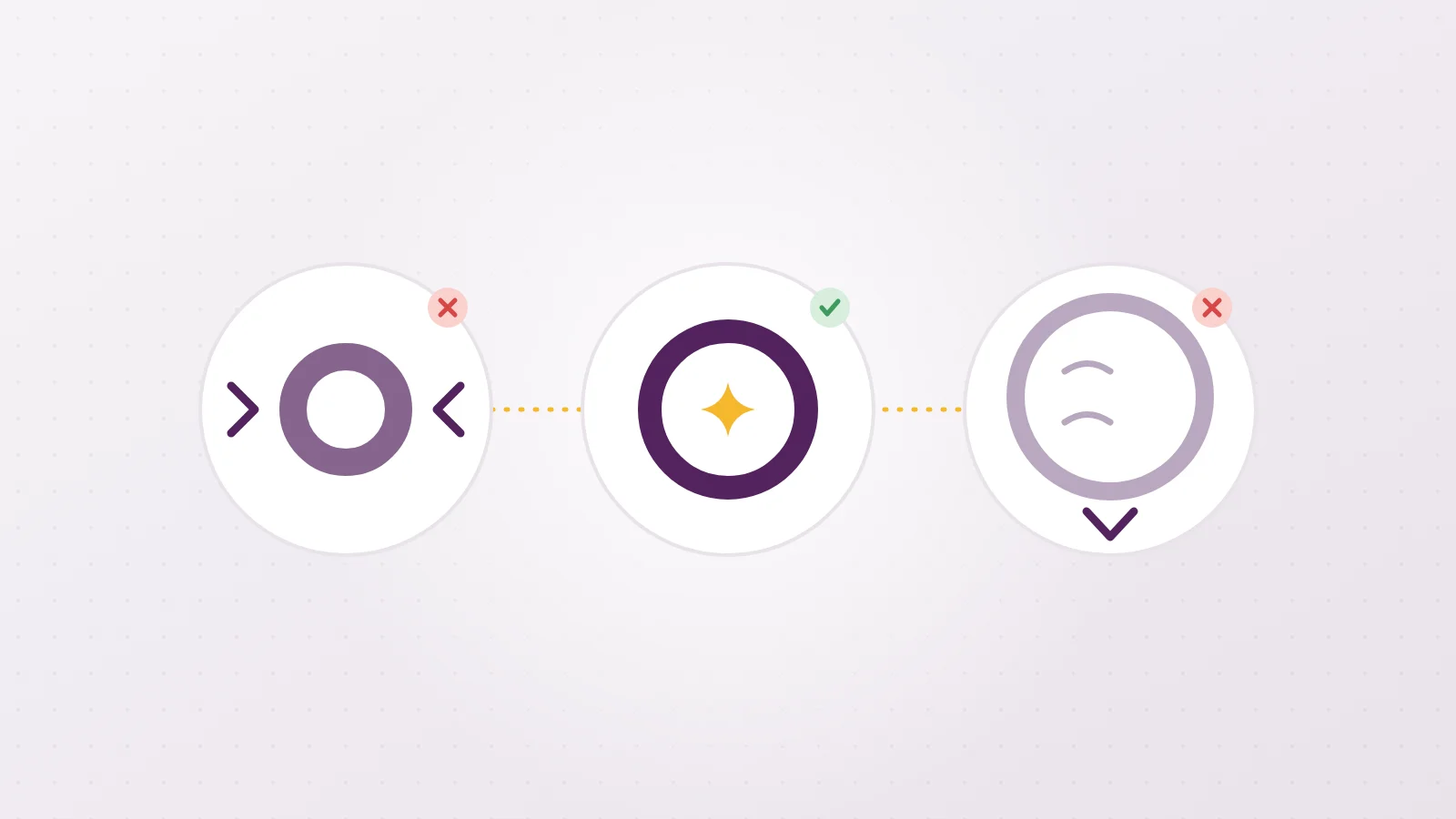
Your body is already reporting these.
Too tight
- A ring pressed into the skin at the base, still visible after you take it off.
- A tourniquet feeling, discomfort that builds rather than fades.
- Sensation dropping away, sometimes the erection softening with it.
- The roll stalling halfway down, so the reservoir never reaches the base.
- Breakage that keeps happening with the same brand.
Too loose
- Wrinkles and loose latex instead of a smooth second skin.
- A condom that creeps up and needs repositioning.
- Slippage on withdrawal, or worse, a condom left behind.
- Lubricant escaping around the base.
This is not only about comfort. A crossover trial of 820 men published in Contraception compared condoms fitted to each participant’s dimensions against standard ones: breakage fell from 1.4% to 0.7% with fitted condoms, and from 2.6% to 0.6% among participants in the largest girth group. Fit is protection, not just pleasure.
When to talk to a clinician
- Redness, itching, burning or swelling after use may signal a latex allergy, which can affect your partner too. A pharmacist or doctor can point you to non-latex options.
- If a condom breaks or slips and pregnancy or an STI is a possibility, emergency contraception and testing are time sensitive. Seek advice within hours, not days.
- Persistent pain, or losing an erection every time a condom goes on, is worth raising with a professional. It is not always a hardware problem.
Length is mostly a non-issue
Length worries people far more than it needs to. Common condoms measure 18 to 19 cm unrolled, against an average erect length of 13.12 cm, or 5.17 in, in that same 2015 review. In other words most condoms are longer than almost anyone requires, and the extra simply stays rolled at the base. It affects neither grip nor protection.
Length only matters when a condom genuinely fails to cover, in which case a king size range gains both length and width together. There is no point hunting for shorter condoms: if it pinches, the width is wrong, not the length.
Latex, polyisoprene, polyurethane: what the material changes
Natural latex is still the benchmark. It stretches generously, so it forgives a millimetre or two of error, and it protects against both pregnancy and STIs. The NHS puts condoms at up to 98% effective with perfect use and 82% in typical use. Almost everything in that gap comes down to avoidable mistakes, and fit is one of them.
Polyisoprene is synthetic latex without the proteins that trigger allergies. It feels close to latex and has no rubber smell, but it tends to be slightly thicker and comes in fewer widths. Polyurethane is very thin and transfers heat well, yet it stretches far less, so your nominal width has to be right. The material will not cover for a bad measurement.
Whatever the material, check the box for a CE or UKCA mark, and check the expiry date. An expired condom has lost elasticity, and with it strength. Store boxes away from heat, which rules out glove compartments and wallets.
Lubricant is the other half of the fit

A correctly sized condom with nothing to glide on still drags. One rule covers most of it: no oils with latex. Coconut oil, petroleum jelly, massage oil and body lotion all degrade latex within minutes and destroy the protection. The NHS is blunt about it: water based or silicone based, nothing else. If you are weighing up the two families, our comparison of water based versus silicone lube settles it by use case, and how to choose a lubricant starts from real situations rather than label copy.
One small detail worth knowing: a drop of lubricant inside the reservoir tip, before you unroll, removes the dry rubbing sensation at the end. And if dryness rather than fit is what is making things uncomfortable, our guide to vaginal dryness causes and solutions explains what to look at first.
Trying sizes without wasting money
Buying three boxes to test three widths adds up, which is exactly why most people never bother. Two ways around it: sexual health clinics and young people’s services hand out condoms free, often in more than one size, and the NHS lists them as a place to get them without charge. Variety packs are the other route, letting you compare widths side by side for the price of one box. Either way, buy small until you have your number.
What to take away
Condom size comes down to a number in millimetres on the back of the box and one division by 2.25. It is not a matter of ego and it is not a comfort nicety: it is the difference between a condom you endure and a condom you forget, and it shows up in breakage rates too. To compare ranges width by width, our condom buying guide does exactly that, and our intimate well-being section covers what sits around the subject.
How do I know if my condom is the right size?
It unrolls all the way to the base without forcing, it leaves no ring pressed into the skin, it shows no wrinkles and it does not move during sex. If any of those four is missing, change width before you change brand.
What is a standard condom size?
The most common nominal width is 52 mm, with an unrolled length of 18 to 19 cm. It suits an erect girth of roughly 10.5 to 11.5 cm, or 4.1 to 4.5 in. Large ranges state 54 or 56 mm, snug ranges 47 to 49 mm.
How do I measure a condom’s nominal width?
Unroll it, lay it completely flat without stretching, and measure across it with a ruler. The figure in millimetres is its nominal width as defined by ISO 4074, and it equals half the condom’s circumference.
Are magnum or XL condoms less safe?
No. Every condom sold legally passes the same strength and leakage testing regardless of width. But an XL worn by someone who needs a standard will slip, and slippage is what costs you protection, not the material.
Should I measure length or girth?
Girth. Standard condoms run 18 to 19 cm unrolled, longer than the average erect length, so any excess just stays rolled at the base. Width is what determines grip and comfort.