Menopause and Sexuality: What Really Changes, and How to Feel Good Again
Menopause and sexuality: what really changes, comfort solutions for dryness and desire, couple talk and when to see a doctor. Warm, judgment-free advice.
8 minhonest, jargon-free read
up to 84%of women feel genitourinary changes
0 hormonesin the comfort tools we cover
Independenttested, no taboo
In short
- Menopause and sexuality are not opposites: what changes is your comfort and your rhythm, not your right to pleasure.
- The estrogen drop can bring vaginal dryness, thinner tissue, shifting desire and new sensations, grouped under the term genitourinary syndrome of menopause.
- Two different tools: a long-term vaginal moisturizer for daily comfort, and a lubricant for the moment itself.
- Talking openly with your partner and adjusting the pace often matters as much as any product.
- For pain, bleeding after menopause or real distress, this is a doctor’s conversation, never self-medication.
A woman leaned over my counter once, lowered her voice, and said something I have heard in a hundred different forms since: “Is this it, then? Is that part of my life just… over?” She was 53, newly through menopause, and convinced that a chapter had closed on her without asking. It had not. What had changed was her comfort, not her capacity for pleasure. And once we untangled those two things, her shoulders dropped about two inches.
That is the whole point of this article. Not to pretend nothing shifts, because it does, and pretending otherwise is its own kind of insult. But to name exactly what shifts, why it happens, and what you can actually do about it. Gently, at your pace, and without a single ounce of guilt. Because menopause and sexuality can absolutely live under the same roof.
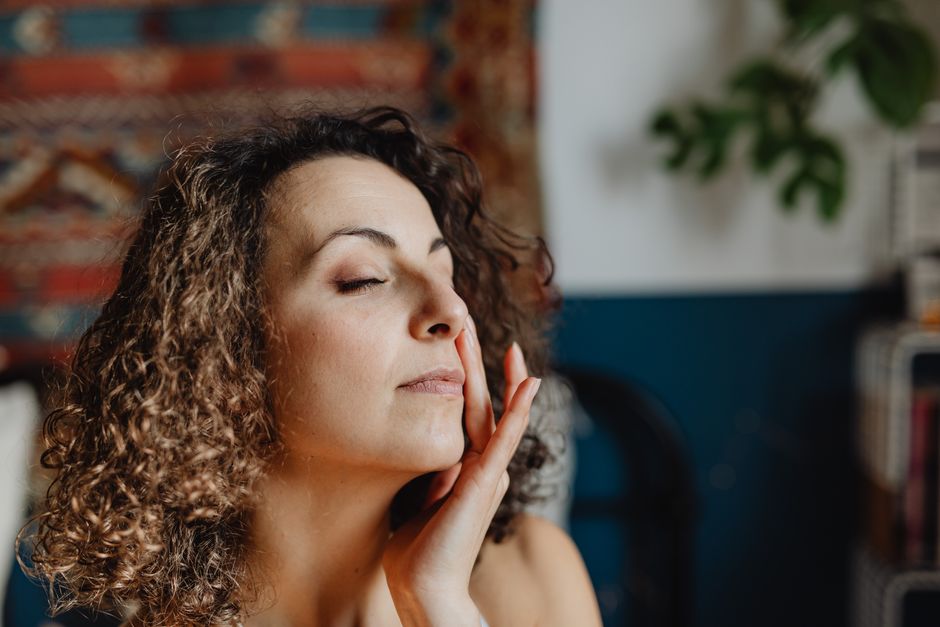
What actually changes: the estrogen drop, explained plainly
Menopause is, at its core, the moment your ovaries wind down estrogen production. Estrogen is not just a “reproductive” hormone. It keeps the tissue of the vulva and vagina plump, elastic and naturally moist. It supports blood flow to the whole area. When it falls, the tissue there responds, and that response has a name doctors now use: genitourinary syndrome of menopause, or GSM.
GSM is common, and I want you to hear that clearly, because so many women assume they are the strange exception. They are not. Studies estimate that genitourinary symptoms touch somewhere between a quarter and the large majority of women after menopause, with vaginal dryness alone reported by roughly three in four. You are not broken. You are, statistically speaking, right in the middle of the pack.
What does that look like in real life? Usually some combination of:
- Dryness, the most talked-about, from a mild “not quite as it was” to genuine daily discomfort.
- Thinner, more delicate tissue, which can make friction feel less pleasant and more sensitive.
- Shifting desire, sometimes lower, sometimes just slower to arrive.
- Changed sensations, where things that used to feel one way now feel another.
- And, surprisingly often, a new sense of freedom: no more contraception worries, no more cycle to plan around, kids grown, and more room to actually explore what you enjoy.
Yes, I put that last one on purpose. For a real number of women, this is the season they finally stop performing and start pleasing themselves. Both things are true at once, and you are allowed to hold them together.
Let’s kill the myth: sexuality does not end at menopause
Somewhere along the line, our culture decided menopause was a full stop on desire. It is a stubborn story, and it does real harm, because women who believe it stop looking for solutions and simply resign themselves. So let me be blunt: there is no biological switch that turns off pleasure at menopause. None.
What exists instead are obstacles, and obstacles have workarounds. Dryness has a solution. Discomfort has a solution. A slower-arriving desire simply asks for more warm-up and less pressure. The clitoris, by the way, does not depend on estrogen to do its job. The machinery of pleasure is still very much there. What you are managing is the environment around it, not the ability itself.
Reframe worth keeping. Menopause is not the end of your sex life, it is an invitation to renegotiate it on kinder, more honest terms. Slower is not lesser.
Symptom by symptom: which comfort lever actually helps
Because every woman’s mix is different, it helps to match each symptom to the tool that genuinely addresses it, rather than throwing one product at everything and hoping. Here is how I talk it through at the counter.
| What you feel | The comfort lever that fits |
|---|---|
| Daily dryness, tightness, discomfort even outside of intimacy | A long-term vaginal moisturizer, used regularly, to rehydrate the tissue over time |
| Dryness or friction only during intimate moments | A lubricant applied in the moment, water- or silicone-based |
| Desire that is lower or slower to arrive | More warm-up, less pressure, and honest talk with your partner |
| Changed or dulled sensations | Exploring new pace, positions and gentle stimulation, no rush |
| Pain during intimacy, or any bleeding after menopause | A medical appointment, not a product (see the red-flag section) |
Notice that the last row is different in kind. Products are for comfort. Pain and bleeding are signals, and signals go to a professional. Hold on to that distinction, it will keep you safe.
Moisturizer or lubricant? The distinction that changes everything
This is the single most useful thing I can teach you, and most people have never had it explained. A moisturizer and a lubricant are not two words for the same product. They do different jobs.
A long-term vaginal moisturizer is a maintenance product. You use it on a regular schedule, a few times a week, independently of any intimacy. It is absorbed by the tissue and works to restore day-to-day moisture and comfort. Think of it like a moisturizer for your face: you do not apply it only when you are about to be seen, you apply it consistently so the skin stays in good shape.
A lubricant, by contrast, is an in-the-moment product. It sits on the surface and reduces friction during intimacy, then its job is done. Water-based options are gentle and easy to rinse; silicone-based ones last longer and suit more pronounced dryness. Many women find their best comfort comes from using both: the moisturizer for the baseline, the lubricant for the moment. If you want to compare textures and formulas, our guide to choosing the right lubricant for your needs breaks down what to look for, and our deep dive on the causes and solutions for vaginal dryness goes further on the daily side.
Read the label. Look for pH-balanced, fragrance-free and glycerin-free formulas, especially if you are prone to irritation or yeast. Simpler is almost always kinder to delicate tissue.
Everyday comfort: hydration, staying active, gentle hygiene
Products help, but a few daily habits quietly do a lot of the heavy lifting. None of these are miracle cures. Together, they make the tissue and the whole experience more comfortable.
- Stay generally hydrated. It will not single-handedly cure dryness, but well-hydrated skin and mucosa cope better.
- Keep the area active. Regular intimacy, alone or with a partner, supports blood flow to the tissue. The old “use it or lose it” has a grain of truth here.
- Be gentle with hygiene. Skip harsh soaps, douches and scented washes. Warm water and a mild, unperfumed cleanser on the vulva only is plenty. The vagina cleans itself.
- Choose breathable underwear and avoid tight synthetic fabrics that trap heat and moisture.
Good reflex. Treat comfort as ongoing care, not crisis management. A moisturizer used steadily for a few weeks tends to work far better than one grabbed in a panic.
The couple conversation nobody teaches you to have
Here is where things quietly go wrong for a lot of couples. She feels discomfort, so she pulls back. He reads the pulling back as rejection, so he stops reaching out. Neither says anything, and a warm relationship slowly goes quiet, all because of a conversation that never happened.
You do not need a grand speech. You need honesty. “My body has changed a bit, some things are less comfortable than they were, and I would love for us to slow down and figure out what still feels good.” That is it. Most partners are relieved, not disappointed, because now they understand and they can help instead of guessing.
Practically, this often means longer, unhurried warm-up, less focus on one single act, and more curiosity about what your body enjoys now, which may be different from ten years ago. If desire itself feels low, that is its own topic worth understanding rather than forcing, and our piece on what sits behind low desire can help you separate the physical from the emotional threads.
Try this. Have the conversation with clothes on, over coffee, not in the bedroom at a tense moment. It takes the pressure off and makes it a team problem, not a verdict.
Medical support: where hormones can enter the picture
Sometimes comfort products and habits are not enough, and that is not a failure, it is simply information. This is where a doctor or gynecologist comes in, because there are medical options that go beyond anything you can buy off a shelf.
Without going into a prescription pad I am not qualified to write, the two broad families you may hear about are local (vaginal) hormonal treatments, often low-dose estrogen delivered right where it is needed, and systemic hormone therapy, which addresses menopause more broadly. Both exist, both help many women, and both have their own considerations, benefits and contraindications that depend entirely on your personal history. That is precisely why they are a conversation with a professional and never a self-serve decision.
No hormonal self-medication, ever. Never source hormonal treatments online or borrow a friend’s prescription. Local and systemic hormones must be assessed and prescribed by your doctor or gynecologist based on your own medical history. This article is informational and not a substitute for medical advice.
The good news is that a frank appointment often unlocks options women did not know existed. Many walk in assuming they just have to live with discomfort and walk out with a real plan. If a first clinician brushes you off, and it happens, ask for a referral to someone who takes menopause seriously.
When to see a doctor: the signals not to ignore
Most menopause-related discomfort is manageable with the comfort steps above. But some signs are your body asking for a professional look, promptly. Please do not wait these out.
- Any bleeding after menopause. Once your periods have fully stopped for twelve months, any new bleeding always needs to be checked, without exception.
- Pain during intimacy that persists despite lubricant and moisturizer.
- Ongoing burning, itching or recurrent urinary infections.
- Real distress, if the changes are weighing on your mood, your relationship or your sense of self.
Post-menopausal bleeding is a red flag. It is very often benign, but it must always be evaluated by a doctor to rule out anything serious. Do not self-diagnose and do not delay the appointment.
Seeking help is not an overreaction. It is you taking your own comfort seriously, which you are more than entitled to do. For more on living well through this season, browse the rest of our well-being guides, written in exactly the same honest, no-taboo spirit.
The takeaway: a new chapter, not a closed book
Let me bring it back to that woman at my counter. What changed her afternoon was not a product. It was permission. Permission to name what she felt, to understand it was normal, and to know she had real, gentle options. The dryness had an answer. The desire had room to return on its own timeline. And the freedom she had not let herself notice was quietly waiting for her.
Menopause reshapes your intimate life. It does not delete it. Give your body comfort, give your relationship honesty, and give a professional the signals that belong to them. The rest, the pleasure, the closeness, the discovery, is still very much yours to keep.
FAQ: menopause and sexuality
Does sexuality really have to end at menopause?
No. There is no biological switch that ends pleasure at menopause. What changes is comfort and rhythm, dryness, thinner tissue, sometimes slower desire, and all of these have gentle solutions. Many women describe this season as freer, not finished.
What is the difference between a vaginal moisturizer and a lubricant?
A long-term vaginal moisturizer is used regularly, a few times a week, to rehydrate the tissue for daily comfort. A lubricant is used in the moment to reduce friction during intimacy. Many women get the best results using both, the moisturizer as a baseline and the lubricant for the moment.
Can I treat menopausal dryness myself, or do I need a doctor?
Mild dryness is usually well managed with over-the-counter moisturizers, lubricants and gentle daily habits, no prescription required. If discomfort persists, if you have pain during intimacy, or if you want to consider hormonal options, that is a conversation with your doctor or gynecologist. This article is informational and not a substitute for medical advice.
Are hormonal treatments safe for menopause and sexuality?
Local and systemic hormonal treatments help many women, but their suitability depends entirely on your personal medical history. They must be assessed and prescribed by a professional. Never self-medicate with hormones or use someone else’s prescription.
I have bleeding after menopause. Is that normal?
Any bleeding once your periods have fully stopped for twelve months must always be checked by a doctor, without delay. It is often benign, but it should never be ignored or self-diagnosed.
How do I bring this up with my partner?
Keep it simple and honest, ideally outside the bedroom and outside a tense moment. Explain that your body has changed a little, that some things feel different, and that you would like to slow down and rediscover what feels good together. Most partners are relieved to understand and want to help.
Ready to choose with confidence?
Discover our independent, tested selections.