
First Time Sex Tips: Feeling Ready, Safe and Comfortable
No normal age, no script to follow: what actually needs sorting before your first time, from consent to protection, and why pain is never part of the deal.

98 %effectiveness of external condoms used correctly every single time
82 %effectiveness in real world use, and the gap is all about technique
72 hwindow for levonorgestrel emergency contraception, 120 h for ulipristal
Water or siliconethe only lube bases to pair with latex condoms, never oil
In short
- There is no normal age. A 2023 national French survey puts the median first time at 18.2 for women and 17.7 for men, which means half of people start later.
- The only thing that really matters is shared desire, said out loud, and revocable at any point.
- Buy condoms in advance, use water-based or silicone lube, and never oil with latex.
- Pain is not part of the deal: stress, rushing and a lack of lubrication explain most of it.
- If it is awkward rather than cinematic, that is the most common experience there is.
You have probably read a dozen contradictory threads and still cannot tell whether you are excited or terrified. First time sex carries a weight of expectation that almost nothing else in life has to bear: it should be perfect, effortless, unforgettable, ideally on the first attempt. In reality it is usually two people being slightly clumsy together while they figure each other out, and that takes nothing away from it.
This article is written for adults, and it will not tell you when to go ahead, because nobody can decide that for you. What it does cover is everything that genuinely gets prepared beforehand: desire and consent, protection, comfort, where the gentlest lubes to start with earn their place, and the myths that do the most damage.
There is no normal age for your first time
Hard numbers help here. France runs one of the largest recurring sexuality surveys in Europe, and its 2023 edition, published by Inserm and ANRS MIE, puts the median age at first intercourse at 18.2 years for women and 17.7 for men over 2019 to 2023. After decades of falling, that age has been creeping back up since the late 2010s.
Median means half of the people surveyed got there later than that. So if you are 22, 27 or 38 and it has not happened yet, you are not behind and you are not a statistical oddity. The only schedule that counts is yours, plus a partner who respects it.
The same survey offers a more useful figure: among people who became sexually active between 2019 and 2023, 75 % of women and 84 % of men say a condom was used that first time. High, and still not everyone.
What being ready actually feels like
The wanting has to be yours
There is a wide gap between wanting this and wanting the subject to be over with. Peer pressure, fear of disappointing someone, the feeling of being the last one, the urge to prove a point: none of those reasons survive the hour afterwards. The simplest test is physical. Excitement with a touch of nerves is a good sign. A knot in your stomach that never loosens is not shyness to be conquered, it is information.
Consent is not a box you tick once
Saying yes once does not cover everything, nor everything that follows. You can be up for one thing and not another, be up for it and then change your mind halfway, with no explanation owed. A partner who welcomes that without sighing is exactly the partner this can go well with. A partner who negotiates, pushes or guilt-trips has already answered the question for you.
Talking first defuses nearly everything
Two or three sentences will do, and they come out far more easily fully dressed in the kitchen than in the moment: what you would like, what you do not want, and the fact that you may ask to pause. Saying that it is your first time is not a confession, it is useful information that invites the other person to slow down.
The tip that takes the pressure off: agree on one plain word, pause, meaning we stop and breathe, no explanation required. Knowing it exists is usually enough that you never need to use it.
Four things to settle before your first time
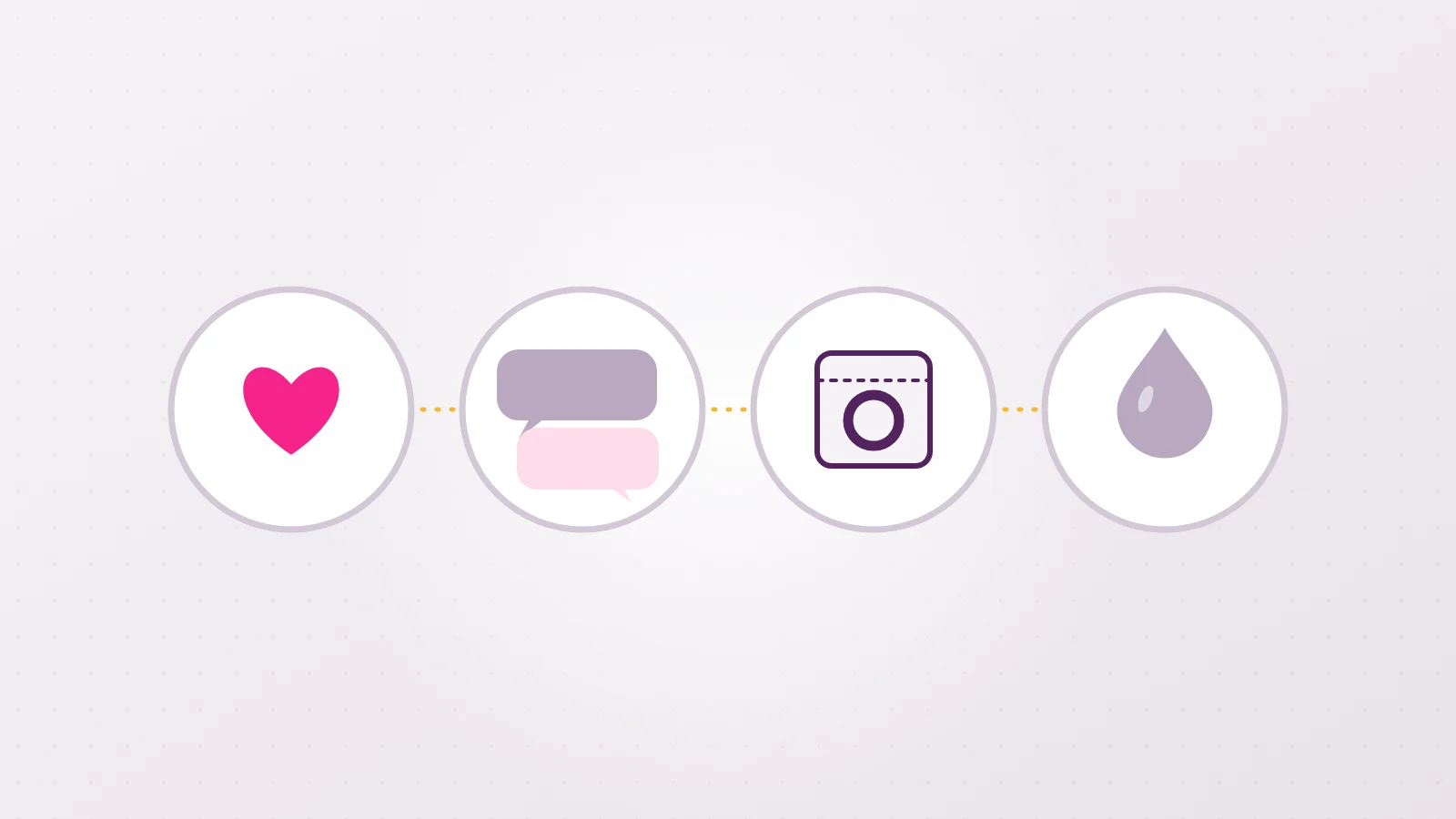
Everything that matters gets handled in advance, calmly. Four points, in this order:
- Desire: from both of you, not from one person or from a calendar.
- Words: what each of you wants, what each of you does not, and how you say stop.
- Protection: condoms bought ahead, in the right size, within arm’s reach.
- Comfort: a room nobody will walk into, time to spare, a bottle of lube already open.
The setting matters more than people expect. A room where someone might barge in, a tight schedule, a last train to catch: the body registers all of it and tenses up. A quiet space, a door that closes and a couple of unhurried hours beat any technique you could read about.
Protection and contraception, sorted in advance
Condoms are still the only method that covers both pregnancy and sexually transmitted infections at once. The NHS guidance on condoms puts them at up to 98 % effective against pregnancy when used correctly every time, against roughly 82 % in everyday use. That entire gap is about how they are handled.
The rules fit in four lines: a new condom every time, an expiry date you have actually checked, put on before any contact, and never two at once, which makes them split. A condom that is too tight or too loose slips or tears, which is a dull but very common reason things go wrong, so our guide to measuring for the right condom fit is worth five minutes of your evening.
On lube, one compatibility rule carries most of the weight: no oils with latex. Massage oil, coconut oil and petroleum jelly weaken the rubber and can make it break. Water-based and silicone-based products are both safe, and choosing between them is mostly about what you are doing, which our walkthrough on picking a lube that suits your situation breaks down.
If a condom splits, or there was not one, emergency contraception exists and using it is unremarkable. Levonorgestrel tablets are taken within 72 hours, ulipristal within 120 hours, and a copper coil can be fitted up to 120 hours after sex, according to the NHS page on emergency contraception. The sooner, the better it works.
Worth remembering: ongoing contraception, STI testing and any pain that settles in all belong with a health professional. A GP, a midwife or a sexual health clinic will answer for your actual situation, confidentially and without judgement. Nothing you read here, or anywhere else online, replaces that conversation.
Pain is not a rite of passage

This is the most stubborn myth of the lot: that it has to hurt for it to count. It does not. Discomfort during a first time nearly always comes down to three very concrete things, stress, rushing and a lack of lubrication, and they feed one another. Natural lubrication depends on arousal and on feeling calm, so a body that is tense, hurried or anxious simply does not keep up, and friction does the rest.
Hence the two unglamorous fixes: take far longer than you planned, and keep an open bottle of lube beside you. That is not an admission of failure, it is the same reflex as putting cream on dry skin. And if discomfort keeps coming back, that is not something to live with either: our notes on getting comfort back when dryness sets in apply at 20 just as much as at 50.
As for bleeding being the proof of a first time, it is not compulsory at all: plenty of people do not bleed, and the absence of it proves nothing whatsoever. Sharp pain, on the other hand, or pain that repeats, deserves a medical opinion. Vaginismus, an infection or endometriosis are not fixed with willpower, and they are treatable.
What if it is nothing like the films?
It very likely will not be, and that is the most widely shared experience on earth. Hands hesitate, the condom takes three attempts, somebody laughs nervously, an arm goes numb. None of it is an omen. Pleasure in particular is learned together and takes time: not reaching orgasm during a first time is ordinary, for women and men alike, and says nothing about how compatible you are.
Stopping partway through is also entirely allowed. Changing your mind, sticking to hands and kisses, postponing to another evening: these are decisions, not failures. What happens afterwards counts nearly as much. Staying close for a while, saying what you liked and what felt awkward, getting a glass of water. That quarter of an hour is what turns a clumsy evening into a good memory.
A habit worth keeping: ask one open question the next day, something like what did you enjoy most. You learn more from that single sentence than from ten articles, and it establishes early that these things can be talked about.
Everything after this gets discovered at your own pace, and our other advice on feeling at ease together covers communication, comfort and the small things that matter, with no pressure to perform.
What actually matters
A good first time is not a performance. It is a moment where two people feel safe, take their time and can say what they think. The rest, the technique, the lighting, the imagined script, gets learned afterwards and forgotten quickly. Desire, words, protection, comfort: with those four in place, there is very little left that can really go wrong.
Frequently asked questions
What is the usual age for a first time?
In France, the median age was 18.2 for women and 17.7 for men over 2019 to 2023, according to the CSF 2023 survey by Inserm and ANRS MIE. Median means half of those surveyed started later than that, so there is no being early or late, only different paces.
Does first time sex always hurt?
No. Discomfort usually comes from stress, rushing and a lack of lubrication, all three of which you can act on by slowing right down and using lube. Sharp or repeated pain is a different matter and deserves a medical opinion.
Do you need lube for your first time?
It is not compulsory, but it is the simplest and most effective thing you can do about discomfort. Choose a water-based or silicone-based product: oils and petroleum jelly damage latex condoms and can make them break.
Can you get pregnant the first time?
Yes, from the very first time, and an STI can be passed on just as easily. A condom covers both risks. If something goes wrong, levonorgestrel emergency contraception is taken within 72 hours and ulipristal within 120 hours.
How do I know I am ready?
When the wanting is yours rather than a partner’s or a calendar’s, when you can talk about it without forcing yourself, and when you know you could stop at any point. If the thought tightens your stomach far more than it lifts your mood, the moment has not arrived.
What if the condom splits?
Stop, then consider emergency contraception within the windows above and an STI test a few weeks later. A sexual health clinic or your GP will give you the right timeline, without judgement.