
Self-Pleasure for Women: A Calm, No-Pressure Guide
Self pleasure for women without scripts or performance: what it really does for you, how to set up the moment, what to explore, gentle hygiene, frequency and toys.
10,280myelinated nerve fibres counted in the glans clitoris alone (2023)
8,000the figure quoted for decades, taken from cattle rather than people
0proven links with infertility, lower libido or long term damage
1gentle wash a day with warm water is all the vulva needs
In short
- Self pleasure for women is ordinary, carries no known health risk, and mostly teaches you about your own body.
- Context matters far more than technique: unhurried time, real privacy, no goal to hit.
- Warm water is enough for washing, and a water based lubricant removes any uncomfortable friction.
- There is no correct frequency. Several times a week and never are both completely ordinary.
- A toy is never required. It is one more option, for the day curiosity shows up.
Most guides to self pleasure for women read like instruction manuals: do this, then that, and an orgasm appears on cue. If that has ever left you feeling slightly broken, you are in very good company. Bodies do not work to a script, and the pressure to follow one is usually the thing getting in the way.
So this guide starts somewhere else. No miracle technique, no performance to deliver, just time, comfort, curiosity and a few honest health facts. If a toy starts to appeal along the way, we get to that further down, and our pick of gentle vibrators to start with will still be there when you feel like it.
What solo pleasure actually does for you
Start with the reassuring part: there is no catch. Touching yourself does not cause infertility, a lasting drop in desire or hidden long term harm. The Cleveland Clinic lists those beliefs as myths, and describes effects that point the other way.
Relaxation comes first. Arousal and the slow comedown afterwards release endorphins, which is why so many women use it as a gateway into sleep. The pelvic floor contracts gently along the way. During a period, that same mechanism eases cramps for some people, though it promises nothing to everyone.
The least dramatic benefit is probably the most useful one: you learn what you like. Which area, how much pressure, what rhythm, at what time of day. Nobody can guess that for you, and once you know it, asking for it with a partner becomes far less awkward.
Setting up a moment that actually feels good
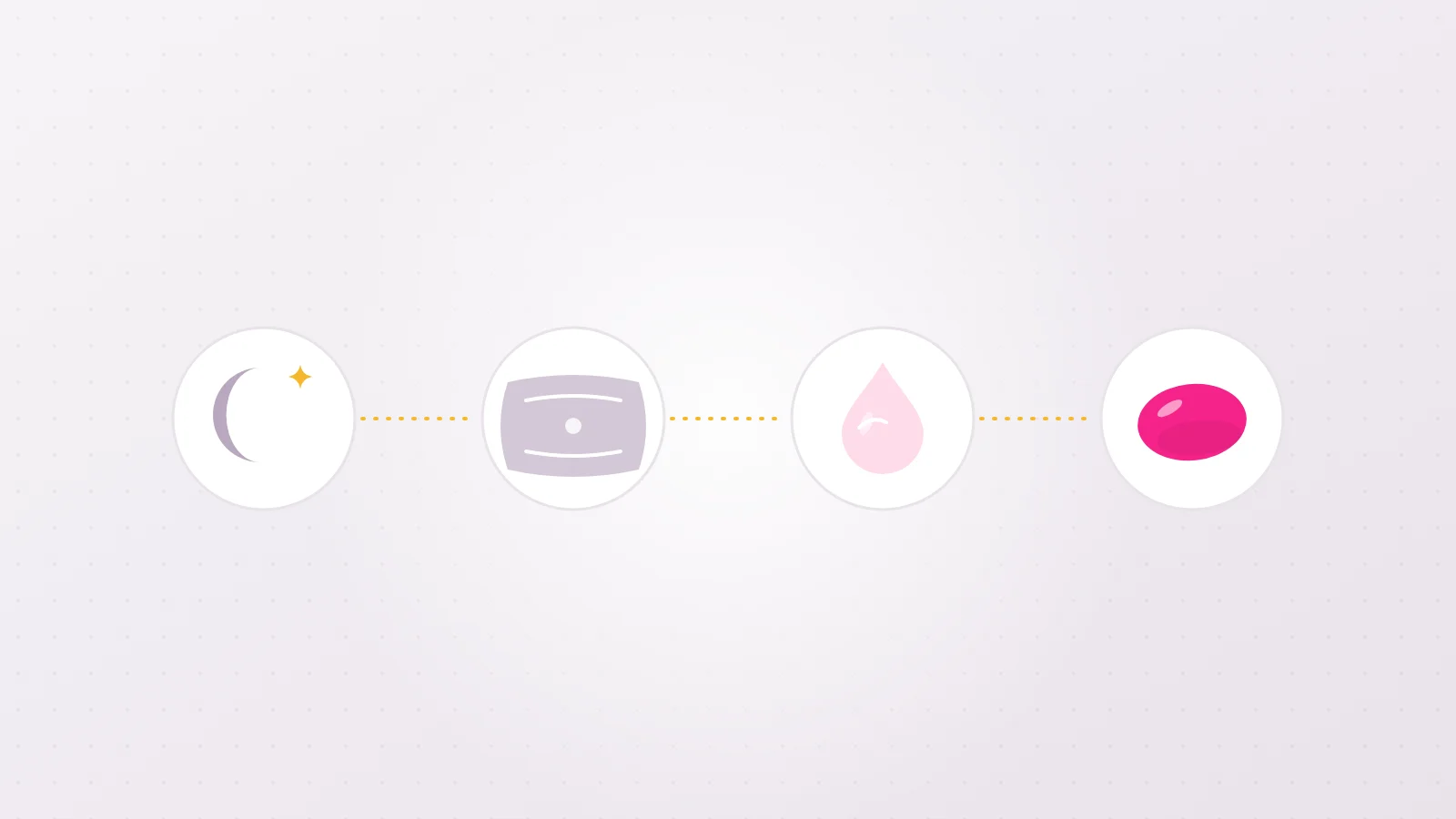
The difference between a good moment and a disappointing one rarely comes down to what your hands do. It comes down to everything around it: how much time you have, how sure you are that nobody is about to walk in, and how comfortable the space is.
Time, and a door that stays shut
The first condition is not remotely romantic: knowing that nobody will knock. A closed door, a phone on silent, and definitely not ten minutes squeezed between two obligations. Bodies take a while to settle, and rushing is the most reliable way to feel nothing at all.
Comfort beats technique
A cushion under your lower back, a room at the right temperature, sheets you actually like: these faintly ridiculous details change a great deal. Some people want light, some want complete darkness, some want music in the background. There is no right answer, only yours.
The same goes for your head. If your thoughts drift to tomorrow’s to do list, that is not a failure, it just means your body has not caught up yet. A warm shower, a few pages of a book, or simply a hand on your stomach while you breathe slowly, is often enough to make the switch.
Exploring sensation instead of chasing a result
There is no manual, which is good news: there is nothing to get wrong. Think of it as scouting rather than following a programme. Start far away, the back of the neck, the inside of your arms, your stomach, your thighs, and let your hand move closer when it wants to.
The clitoris stays the most sensitive area for the large majority of women, for a very concrete reason. A study published in 2023 in the Journal of Sexual Medicine counted an average of 10,280 nerve fibres in the glans alone, and corrected the 8,000 figure everyone had been repeating, which originally came from research on cattle. Firm pressure is not automatically the best pressure. Our guide to clitoral stimulation goes further into the anatomy.
Change one thing at a time
Three variables are enough to change everything: area, pressure, rhythm. Try lighter, slower, through fabric, in small circles, then completely still for a few seconds. Make a mental note of what surprises you pleasantly, what does nothing, what becomes too much. That map is personal, and it shifts with age, cycle and tiredness.
Orgasm is not the exam
Plenty of women discover strong sensations long before any orgasm, sometimes for months. Setting orgasm as the target tends to do the opposite of what you want: attention moves to the result, and sensation fades out. If nothing arrives, you still had a pleasant half hour, which was the point.
The one trick worth trying
Give yourself a minimum amount of time, say twenty minutes, and ban the goal for that stretch. Knowing that nothing is expected of you is very often enough to bring sensation back.
Gentle care: what helps and what irritates
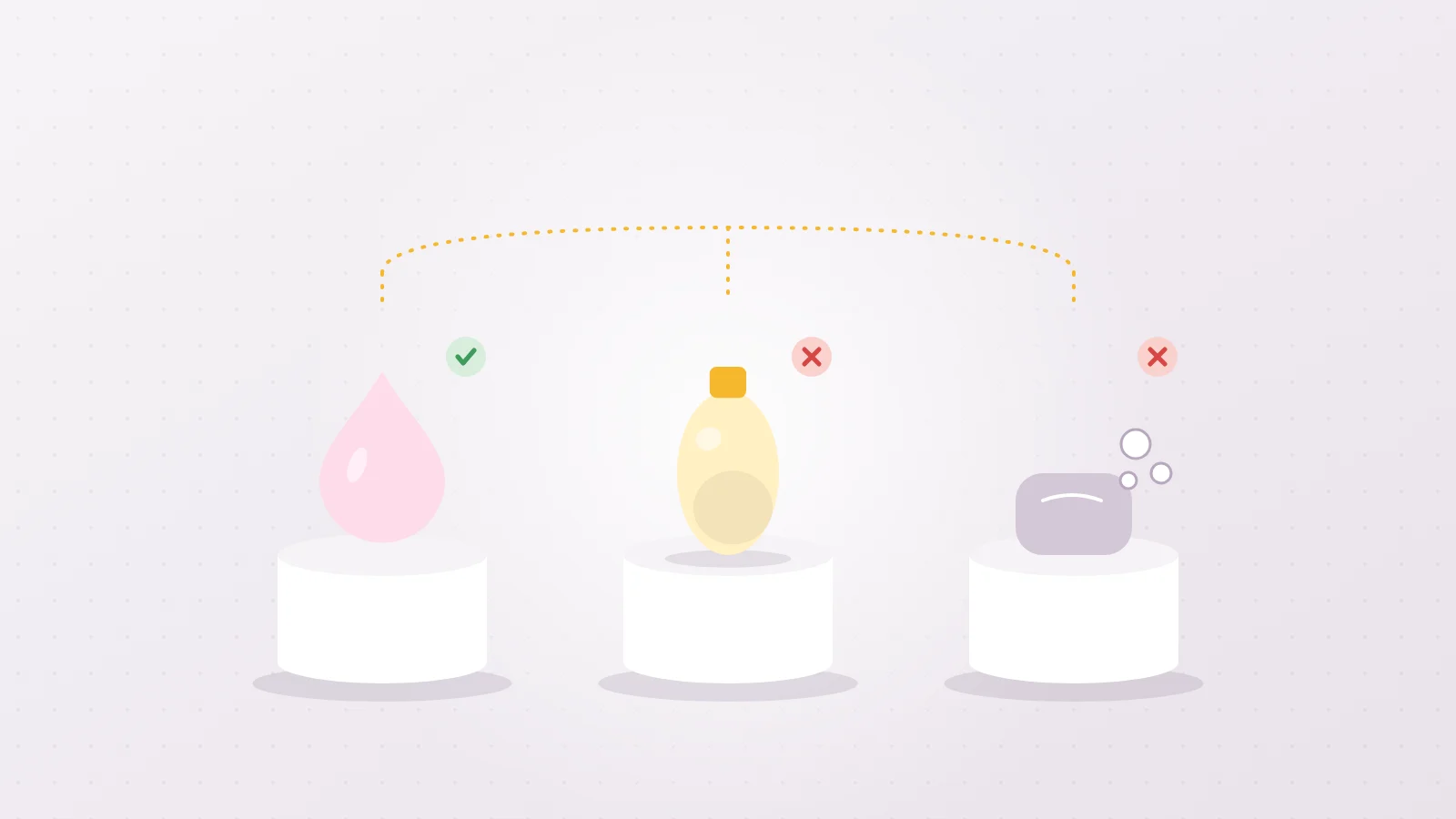
The vulva needs almost nothing. NHS sexual health services recommend washing the outside once a day with warm water, and advise against perfumed soaps, shower gels and douching of any kind: the vagina cleans itself, and washing inside it disturbs the bacteria that keep it healthy.
Beyond that, two simple habits. Clean hands and short nails prevent small irritations. And if anything feels dry or dragging, a water based lubricant solves it instantly. Natural lubrication depends on your cycle, stress, hormonal contraception and sleep, not on how much you want it.
What to avoid: cooking oil and perfumed creams, which irritate the mucosa and weaken latex, and any object not designed for the job, because porous materials and sharp edges are not forgiving.
Where toys fit in, if they fit in at all
Whenever you feel like it, and not a day earlier. A toy does not supply pleasure, it supplies a different sensation, steadier than a hand, which is exactly why many women enjoy it. If the idea appeals, start small, quiet and low powered rather than the reverse: our first vibrator guide covers the usual beginner mistakes, and our notes on choosing a vibrator go through materials and intensity.
Two safety rules apply to everyone: a non porous material, quality silicone or ABS, and a wash in warm water with mild soap after every use, followed by a full dry before it goes away.
How often is normal?
This is the question that comes up most, and the answer is always a little disappointing: there is no benchmark. Desire rises and falls with your cycle, your mental load, the state of your relationship and how much you have slept. Whole weeks without a thought about it signal nothing.
Several times a week signals nothing either, as long as it stays a pleasure rather than an automatic way to switch off anxiety. The useful marker is not a number, it is friction with the rest of your life.
If it starts taking the place of work, relationships or sleep, or if it comes with shame that settles in and stays, talking to a professional usually lifts that quickly.
When to see someone
Pain, burning, bleeding, itching that will not go away, or an inability to reach orgasm that genuinely weighs on you: these are ordinary reasons to see a doctor, a midwife or a sex therapist. This article is information, not a substitute for professional medical advice.
What to take away
Solo pleasure is not a skill to master or a box to tick. It is time where you owe nothing to anyone, including yourself. Time, comfort, curiosity, a bit of gentleness, and the rest follows, or does not follow today, which matters far less than it feels like it should. More articles written in the same spirit are waiting in our intimate wellbeing advice.
Is female masturbation bad for your health?
No. There is no established link with infertility, a lasting drop in libido or any kind of long term damage. The Cleveland Clinic files those beliefs under myths and lists documented effects on stress, sleep and pain instead.
How often is normal?
There is no normal. Frequency moves with your cycle, your stress levels, your sleep and your relationship. Weeks without thinking about it mean nothing, and several times a week means nothing either, as long as it still feels like pleasure rather than an automatic reflex.
Do I need lubricant?
Not strictly, but it is usually more comfortable. A water based lubricant removes any dragging feeling and works with every toy material. Natural lubrication varies with your cycle, stress, hormonal contraception and tiredness, so its absence says nothing about desire.
I cannot reach orgasm, is something wrong?
Not in itself, especially early on. Plenty of women feel real pleasure long before they experience an orgasm, and aiming at the result tends to push it further away. If the difficulty lasts and starts to weigh on you, a doctor, a midwife or a sex therapist can look at it with you calmly.
Can self pleasure harm a relationship?
Usually the opposite. Knowing what you like makes it far easier to ask for it. Solo pleasure and shared pleasure do not replace each other, they simply answer different needs.