
The 5 Love Languages: What They Are Actually Worth
The five love languages explained without the hype: what each channel means, how to spot yours and your partner's, and why researchers say you should not treat it as a personality label.

1992the year Gary Chapman’s book came out
50languages it has been translated into
3core claims, none backed by the evidence
2024the review that changed the conversation
In short
- The five love languages are words of affirmation, quality time, acts of service, gifts and physical touch.
- The model came out of Gary Chapman’s counselling practice, not out of research.
- A 2024 review found no support for its three central claims: one primary language, exactly five of them, and happier couples when partners match.
- A better metaphor, the authors argue, is a balanced diet: you need every nutrient, not one favourite food.
- Keep the framework as a conversation starter. Drop it as a personality label.
You spent the evening cooking, tidying, keeping everything running. You get a warm “thanks, that’s sweet,” and something still feels flat. Or the reverse: you bring flowers home and the response barely registers, when fifteen minutes on the sofa with both phones face down would have landed perfectly. The five love languages promise to explain exactly that gap, which is probably why the idea refuses to go away.
So let’s be straight about it: what the model actually says, how to spot your own pattern and your partner’s, what researchers found when they put it to the test (it is more interesting than any online quiz), and what genuinely keeps people feeling loved over years rather than weeks.
The five love languages, plainly explained
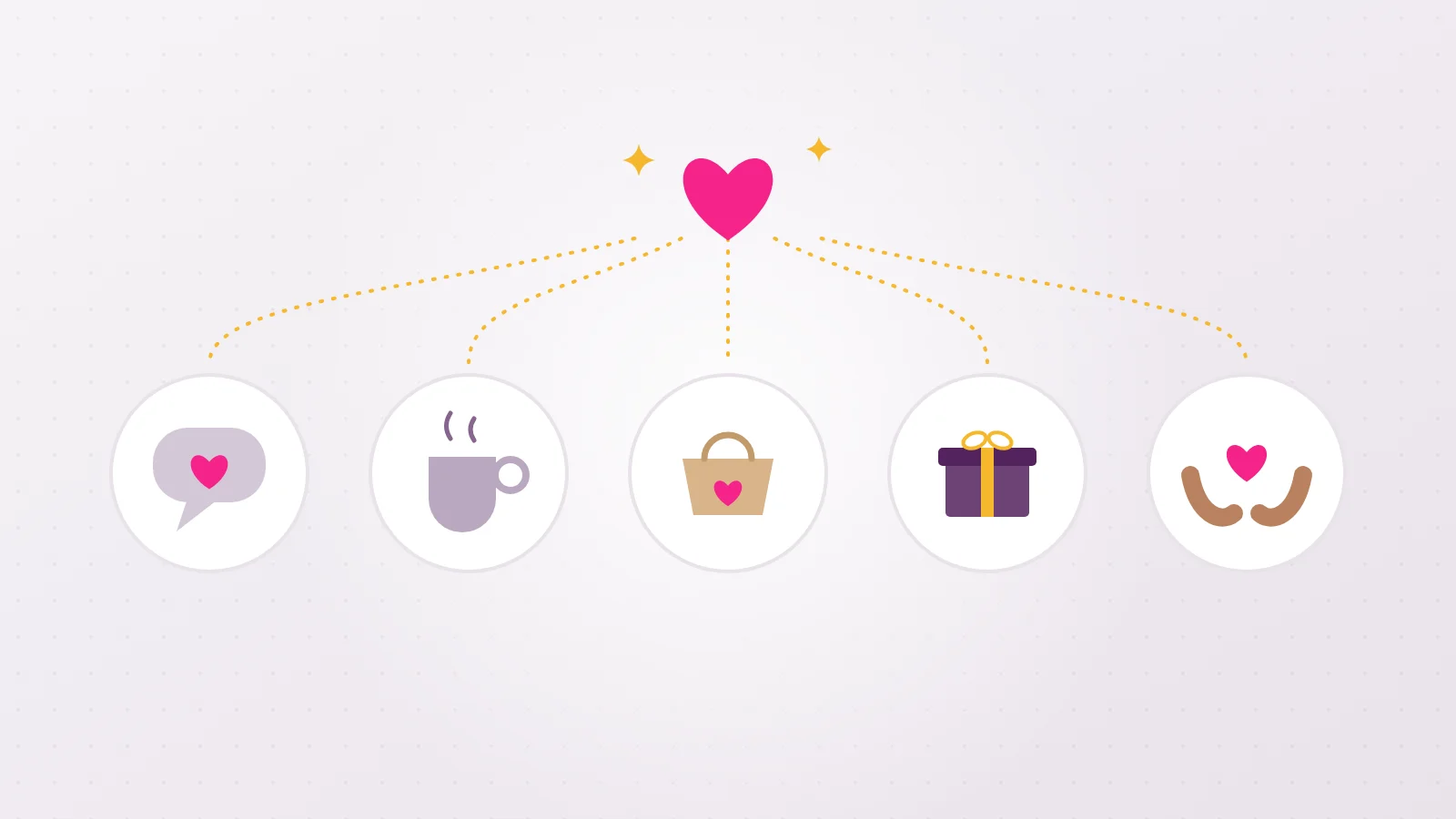
Gary Chapman, an American pastor and marriage counsellor, published The Five Love Languages in 1992. His premise: each of us has a preferred channel for giving and receiving affection, and when two people use different ones, the love is real but it keeps missing the target. One thing worth saying before the list: none of these five is more serious or more grown-up than the others. Needing physical closeness is not shallower than needing words, and working out together how to feed that channel, through everyday affection as much as through toys designed to be used by two people, counts just as much as a well-chosen speech.
Words of affirmation
Saying what you appreciate, out loud and specifically. Not “you’re great,” but “what you said at dinner last night took guts.” People wired this way remember a genuine compliment for months, and an unkind line thrown mid-argument for considerably longer.
Quality time
Being together with full attention: screens down, conversation that isn’t about logistics or childcare. Half an hour of real presence outweighs a whole evening sitting side by side scrolling two separate feeds.
Acts of service
Taking weight off your partner’s shoulders before being asked: the dishes done, the appointment booked, the car sorted. It is the quietest of the five and the easiest to stop noticing, right up until the day it stops.
Gifts
Nothing to do with budget. It is tangible proof that you were on someone’s mind while they were out in the world: the book spotted in a window, the favourite pastry, a pebble from a beach. The object matters far less than the thought it makes visible.
Physical touch
A hand on the back in passing, sleeping tangled up, the ten-second hug at the door. This one covers all affectionate contact, well beyond sex, and it is usually the first to fade when life gets crowded.
| Language | What fills the tank | What drains it |
|---|---|---|
| Words of affirmation | Appreciation said out loud | Criticism, sarcasm |
| Quality time | Undivided attention, no screens | Cancelled plans, distraction |
| Acts of service | Shared mental load | Broken promises |
| Gifts | Small tokens that show you thought of them | Forgotten dates |
| Physical touch | Regular affectionate contact | Long stretches of distance |
How to work out yours, and your partner’s
You don’t need a thirty-question quiz. Three prompts do the job, and they work far better out loud than alone in your head.
- Listen to your own complaints. Whatever you keep asking for is a direct readout of what’s missing. “We never talk any more” points somewhere completely different from “I do everything around here.”
- Notice what you give without thinking. Most of us give in our own dialect. If you’re the one who fixes, books and remembers, acts of service probably matter a lot to you.
- Recall one moment you felt deeply loved. What was the other person actually doing? The answer is rarely vague.
The ten-minute exercise
Each of you writes down three specific things the other could do this week that would genuinely land. Specific means “rub my feet on Friday night,” not “be more affectionate.” Swap the lists. No commentary, no negotiating. This is usually the moment you discover your partner was waiting on something remarkably small.
What the research actually found
Here’s the part most articles skip, which is a shame, because it’s the most useful bit. Chapman’s framework didn’t come from studies; it came from what he observed across years of counselling. Psychologists eventually decided to test it properly, and the verdict is blunt.
In 2024, Emily Impett, Gideon Park and Amy Muise reviewed the available evidence in Current Directions in Psychological Science. They tested the three assumptions the whole theory rests on, and not one of the studies they surveyed supported them:
- “Everyone has one primary language.” Not really. Ask people directly and they report needing all five. Their scores across the five scales rise and fall together instead of trading off.
- “There are exactly five.” Statistical analyses don’t reproduce that structure. Depending on the study, three, four or five dimensions emerge, and never quite the ones in the book. Other ways of showing love are missing from the list entirely.
- “Matched couples are happier.” The most appealing claim and the weakest. People feel better when they receive affection, full stop. Whether the form happens to match their supposed language makes little measurable difference.
The authors offer a replacement image, and it holds up much better: love isn’t a language you learn to speak, it’s a balanced diet. Nobody thrives on a single nutrient. You need words, presence, practical help, small tokens and touch, in proportions that shift with the week, your energy and the stage of life you’re in. The upside is immediate: nobody gets filed into a box.
When the issue is bigger than languages
A self-help framework won’t repair a relationship in real trouble. If conversation has been stuck for months, if desire has dropped off and stayed down, if either of you feels belittled, controlled or unsafe, talk to a professional: a couples therapist, a sex therapist, a psychologist, or your GP, who can point you to the right person. That isn’t admitting defeat. It’s a shortcut.
What actually keeps a couple fed
If love languages aren’t the right frame, what is? Relationship science has converged for years on something less catchy but far sturdier: perceived partner responsiveness. In plain terms, your belief that your partner understands you, takes you seriously and cares. It’s one of the strongest predictors of relationship satisfaction, and its effects show up even in biological stress markers measured ten years later.
What that changes day to day: less decoding, more responding. The ingredients Impett’s team put on the plate:
- Emotional support: showing up when things are hard, without rushing to fix the problem.
- Companionship: sharing ordinary things, laughing at the same nonsense, having rituals that are yours.
- Expressed gratitude: noticing what your partner does, and saying so, especially the invisible jobs.
- Support for personal goals: backing what your partner is building outside the relationship, which matters particularly in couples with egalitarian values.
- Touch and desire: keeping physical affection alive rather than waiting for it to return on its own.
On that last point, if the two of you have drifted into polite flatmate territory, the fix isn’t finding the right language. It’s building occasions again. Our guides on closing the distance after a long dry spell and on bringing desire back into an ordinary week take that route, without the grand theories.
Four things to try this week

- One specific request a day. A request, not a complaint. “I’d love a twenty-minute walk tonight” is actionable. “You’re not interested in me any more” isn’t.
- One thank you for something invisible. The shopping, the alarm set, the bill paid.
- Twenty screen-free minutes. Even standing in the kitchen. The change in attention is felt instantly.
- One piece of contact that asks for nothing. A hand, a shoulder, a hug going nowhere. The fastest nutrient to forget.
The right way to use the model
Treat the five languages as a conversation grid, not a diagnosis. “My language is acts of service, so you need to adapt” shuts the topic down. “I feel most loved when you take something off my plate before I ask, what about you?” opens it up. That’s the whole difference.
So should you bin the five love languages?
No, as long as you take them off the pedestal. Chapman’s book isn’t a scientific finding, it’s a conversation tool, and it’s genuinely good at that: it hands people concrete words for needs they struggle to name. Its mistake is turning a shifting preference into a fixed identity.
The more accurate version fits in one line: nobody has just one language, everybody needs all of it, and the proportions change as life does. So instead of hunting for your profile in a quiz, ask your partner what’s been missing lately. Then answer. If the subject interests you, there’s more in our writing on life as a couple, and for the evenings when the willingness is there but the words aren’t, a few playful games to try together often work better than a long talk.
What are the five love languages?
Words of affirmation, quality time, acts of service, gifts and physical touch. These are the five channels Gary Chapman described in his 1992 book to explain how people give and receive affection.
How do I find out my love language?
Look at three things: what you keep asking your partner for, what you give without being asked, and one specific memory of feeling deeply loved. Those three clues are more useful than a questionnaire, provided you share the answers with each other.
Are love language quizzes reliable?
Not in a scientific sense. Statistical analyses don’t recover five cleanly separate dimensions, and most people score highly on several languages at once. A quiz is a fine way to start a conversation, but it isn’t a diagnosis.
Can you have more than one love language?
Yes, and that’s the norm. The 2024 review in Current Directions in Psychological Science found that people report needing all five forms of affection, in proportions that shift with tiredness, life stage and the relationship itself.
What if my partner and I have different love languages?
It’s far less of a problem than the book suggests. Research doesn’t confirm that matched couples are happier. What matters is receiving affection in some form and feeling heard, so make concrete requests rather than trying to guess each other’s profile.