
What Is Kink? Meaning, Kink vs Fetish, and How to Talk About It
What kink really means, how it differs from a fetish and a fantasy, what the research shows about how common it is, and how to raise it with a partner.
1 in 2adults report interest in at least one practice labelled unusual
1 in 3have already tried one of them at least once
86%of the general population still hold stigmatising beliefs about kink
2 frameworksguide consent in the kink community: SSC and RACK
In short
- Kink is an umbrella word: any taste or practice that sits outside conventional sex, with no illness attached to it.
- A fetish is one kind of kink, focused on an object, a material or a non-genital body part.
- Population surveys show these interests are far more common than most people assume.
- Nothing counts as kink without consent that is free, informed and revocable at any moment.
- Talking about it works best when you plan it: a calm moment, an open question, no obligation to act on anything.
A word dropped in a TV series, a box ticked on a dating app, a half-question asked late at night: the word kink is everywhere, and almost nobody stops to explain what it actually means. So people end up wondering, quietly and alone, whether their curiosity is normal. Let’s clear that up straight away: the word is far more ordinary than its reputation suggests. It describes neither a disorder nor a permanent label.
If your question is mostly practical, as in “we want to try something, what do we buy”, the honest answer is: very little, and soft rather than rigid. We have set out elsewhere what belongs in a first set of soft restraints and what you can safely skip, because most beginners buy too much, too fast, and far too stiff.
What kink actually means
A kink is first of all a bend, a loop, a twist in a wire or a garden hose. The sexual use keeps that picture: a small bend away from the straight line. That is exactly why it stands opposite the word “vanilla”, used for sex with nothing particular added. The word carries no judgement in its construction. It only says: not in a straight line.
Kink, kinky: what the words cover
As a noun, a kink is one specific interest. As an adjective, kinky describes a person or an atmosphere that sits outside the conventional repertoire. Put plainly: having a kink means having a particular taste, and it is an interest rather than a compulsory identity. You can have one for three years and then find it has quietly gone.
Kink, fetish, fantasy, BDSM: four words people keep mixing up
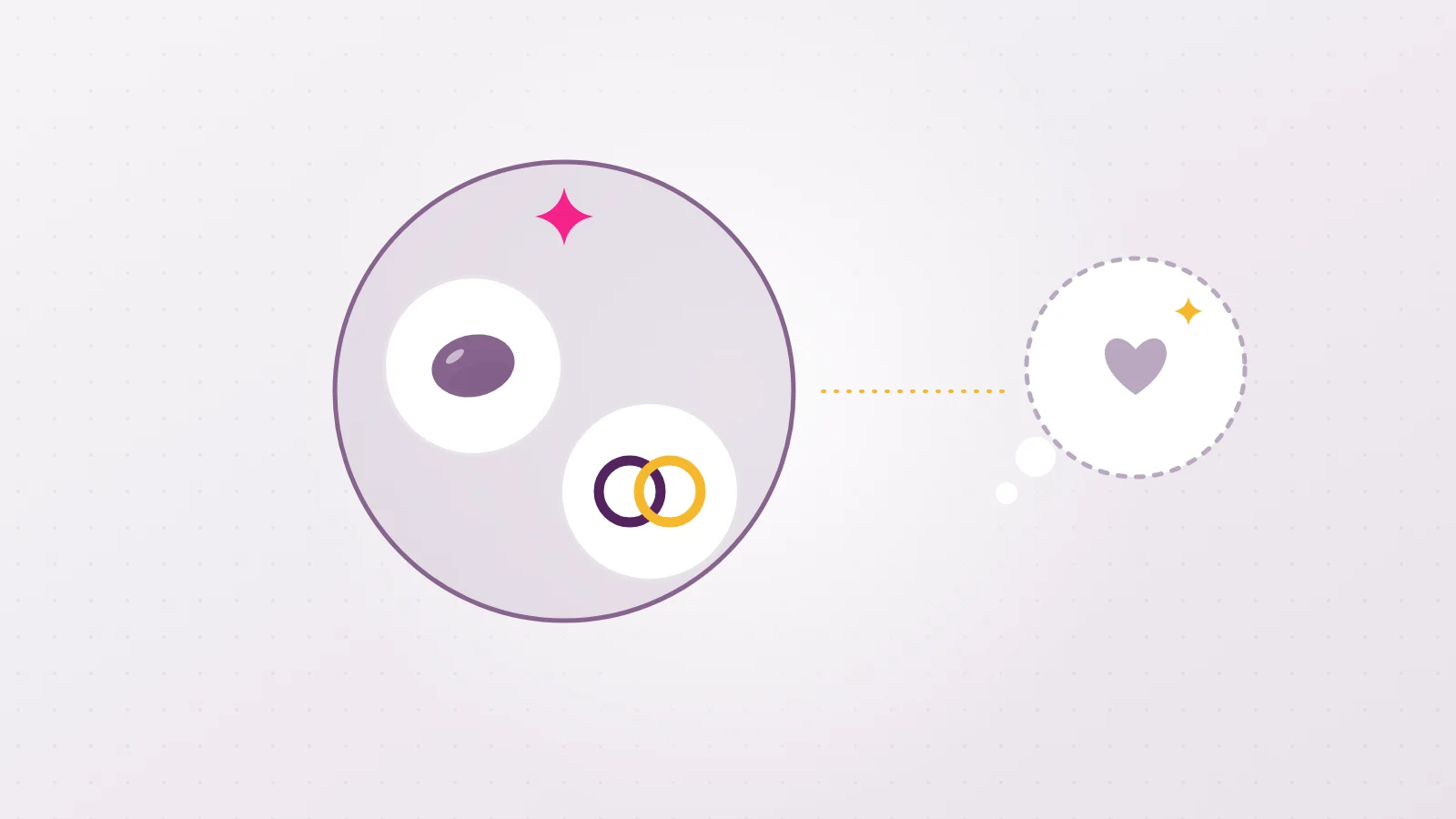
| Word | What it describes | The key point |
|---|---|---|
| Fantasy | A scenario that is arousing in your head | You may have no wish to live it out, and that is perfectly fine |
| Kink | A taste actively sought in real life, outside the conventional script | It adds intensity but is not required for pleasure |
| Fetish | A kink centred on an object, a material or a non-genital body part | It can become necessary for arousal, not just enjoyable |
| BDSM | A family of kinks built around restraint, sensation and authority | A subset of kink, with its own codes and vocabulary |
Two rules are easy to remember. All fetishes are kinks, but not the reverse: kink is the broad term, fetish a category inside it. And the most useful nuance is about the place the thing occupies: a kink tends to enhance the encounter with a partner, whereas a fetish can end up replacing it, once the object becomes the condition for arousal. BDSM is not the whole of kink either: it is its best known branch, and we have described the gentlest version of it, the one that needs no equipment and no pain.
Is it rare? What the surveys really show
This is the question nobody asks out loud, so here are numbers instead of impressions. A survey of 1,040 adults, sampled to match the population of a Canadian province, measured interest in practices classed as unusual. Nearly half of respondents reported interest in at least one of those categories, and about a third had experienced one at least once.
Social attitudes have not kept pace. A 2022 study in European Psychiatry compared 256 BDSM practitioners with 300 people from the general population: about 86% of the general population respondents held stigmatising beliefs about these interests, while the same work did not find the fragile psychological profile practitioners are assumed to have. Very common interests, then, held by people convinced they are the only ones: that silence is what manufactures shame.
What a kink looks like in practice
No exhaustive catalogue here, it would be endless. These are the broad families you meet most often.
- Restraint: being held still, or holding your partner still, with an exit always available.
- Sensory restriction: a blindfold, a pair of headphones, so attention gathers somewhere else.
- Authority play: one leads, one follows, for an agreed length of time, after which everything is level again.
- Role play: a scenario, a uniform, some distance and therefore some freedom.
- Materials: leather, latex, lace, silk, as much for the feel as for the look.
- Words: instructions, emphatic praise, or on the contrary not being allowed to speak.
The trap of the checklist
A kink is not a box to tick. Recognising none of your own tastes in a list means nothing: many people are drawn above all to a mood, a slowness, a way of being looked at. If you want to revive something without entering a particular register, there are much simpler playful ideas for two to start with.
Consent: the thing that holds it all together
Without consent, a practice is not “kink done badly”: it is assault. The community has formalised that requirement in two acronyms you will see everywhere.
SSC and RACK, two compasses
SSC stands for safe, sane and consensual, the older and simpler benchmark. RACK stands for risk-aware consensual kink. The difference matters: RACK accepts that no practice carries zero risk and shifts the demand towards information. Not “is this harmless”, but “does each person know exactly what they are saying yes to”.
The safeword
A safeword is a word chosen in the cold light of day, unrelated to the situation, that stops everything immediately with no explanation owed. Many couples use three levels: green to carry on, amber to slow down, red to stop. The point is that it lets you say “less, please” without killing the mood. Choose it in advance, and make it work for both of you.
Negotiate before, come back to it after
Before: who does what, what is completely off the table, how long, what signal to use if speaking gets hard. Five minutes is enough, and it changes everything. After: a landing period, what the community calls aftercare, then a calm debrief of what worked and what did not. That afterwards is not a courtesy. It is what makes a next time possible.
Safety limits, without the drama
Anything involving blood flow, the neck or breathing carries real risk, including between fully consenting people, and has no place in early experiences. For restraints: never around the neck, never leave anyone alone, keep safety scissors within reach, and stop if fingers turn cold or numb. If a practice leaves lasting pain, a mark that will not fade, or anxiety, speak to a doctor.
How to raise it with your partner
This is the genuinely hard part, much harder than the practice itself. The fear is rarely of being turned down. It is of being looked at differently afterwards. Start with the moment. Not in bed, because the request then becomes immediate pressure. Not in the middle of a row, because everything said will land as a reproach. Try walking, cooking, driving: situations where you are not holding eye contact make admissions far easier.
Open with a question, not a request
Three openers that work: “is there anything you have never dared tell me?”, “I read something that got me thinking, can I tell you and you say what it does for you?”, “if we were allowed to try one new thing, what would you pick?”. A question sets up an exchange, a request sets up a verdict to deliver.
For couples who find speaking awkward, the yes / no / maybe list is the most effective tool there is. Each of you fills in your own separately, then you compare: you only discuss the shared maybes, and you never touch a no. It spares you the dreaded big confession and gives you something concrete to look at together.
If the answer is no
A no is about the practice, not about you. It is not up for negotiation, and it deserves neither sulking nor the same request repackaged the following week. Some kinks stay fantasies for life, and that is a perfectly liveable outcome. If what you really feel is general distance between you, the subject may lie elsewhere, and our ideas on rebuilding closeness when daily life has taken over will serve you better than a negotiation.
Starting gently: three evenings is enough
- One evening for talking, nothing else. The wants, the refusals, the safeword. Nothing is going to happen, and saying so in advance removes the pressure.
- One evening with a single new element. A blindfold, or wrists held in your hands, for ten or fifteen minutes. One change only, so you know what produced the effect.
- One evening to talk it over. What you liked, what felt off, what you would repeat. Everyone skips this step, and it is the most informative.
The rule that prevents most disappointments
One new element per evening, and a short duration agreed before you start. Stopping while it is still enjoyable makes you want to do it again. Carrying on to discomfort mostly makes you want to forget it.
When a kink is worth a professional’s opinion
A widely misunderstood point: an atypical sexual interest is not a disorder, and psychiatric manuals draw a clear line between the two. A disorder is only diagnosed when the interest is intense and persistent, generally for six months or more, and causes significant distress or impairment, or harms other people, in particular when it involves people who have not consented or cannot consent. Discomfort that comes from other people’s disapproval is not enough for a diagnosis. The situations that do warrant a conversation with a sex therapist or a doctor: when the kink becomes the only available route to desire and that weighs on the relationship, when you cannot stop although you want to, or when it pushes towards anything that would override someone else’s consent.
What to take away
Kink says something simple: a taste that steps outside the expected script. Three things to keep: consent is negotiated before and checked during, one new element at a time is plenty, and the conversation afterwards matters as much as the thing itself. To go further at your own pace, our other articles about life as a couple approach communication, desire and closeness from different angles.
Frequently asked questions
What does kink mean, exactly?
Literally, a kink is a bend or loop in a wire. In a sexual sense, it is any taste or practice that sits outside what is treated as conventional sex. The word stands opposite “vanilla” and carries no judgement in itself: it only marks a departure from a standard script nobody ever actually agreed on.
What is the difference between a kink and a fetish?
Kink is the broad term: it adds intensity but is not required for pleasure. A fetish is one category within it, centred on an object, a material or a non-genital body part, and it can become necessary for arousal. All fetishes are kinks, but the reverse is not true.
Is having a kink abnormal?
No. In a survey of a representative sample of 1,040 adults, nearly half reported interest in at least one practice classed as unusual, and about a third had tried one. Psychiatric manuals only describe a disorder when the interest causes lasting distress or harm to others.
How do I tell my partner about a kink?
Outside the bedroom and outside any period of tension, opening with a question rather than a request. The yes / no / maybe list, filled in separately then compared, is the most effective tool: you only discuss the shared maybes and never touch a no.
Do I have to act on it?
No. A fantasy can stay a fantasy for life without any particular frustration. Many couples simply talk about it, or play with it in words, and already find that changes something real.
Can a kink fade?
Yes. Tastes shift with age, tiredness and trust in the relationship. A kink that felt intense at thirty can mean nothing at forty.