Massage Candle: What It Is and How to Use It Safely
What is a massage candle, which waxes are skin-safe, and how to use one without burns. Your warm, careful guide to melt-into-oil relaxation.
6 minread, no jargon
~50°Csoy wax melt point
0 paraffinplant waxes only
Skin testbefore every use
In short
- A massage candle is made from low-melt plant waxes and butters that turn into a warm, pourable oil, not a hot candle wax.
- Good soy or coconut wax melts around 45 to 50°C, just above skin warmth, which is why it feels soothing rather than scalding.
- Always test the temperature on your own inner wrist first, and keep the oil to non-intimate skin: back, shoulders, arms, legs.
- Choose paraffin-free formulas with a wooden wick, nourishing butters, and gentle, skin-friendly fragrance.
The first time someone slid a little pot of massage candle across my pharmacy counter and asked, “So this… goes on the skin?”, I understood the confusion. A candle you pour onto your partner sounds like a lovely idea and a small burn hazard in the same breath. It is neither mystery nor gimmick once you know what is actually melting in that jar. So let me walk you through it the way I would if you were standing in front of me: what it is, why it stays warm and not hot, and how to use one without a single anxious second.
By the end, you will know how to spot a good one, how to test it in five seconds, and how to fold it into a slow evening at home. No incense-and-mysticism sales pitch, just honest guidance from someone who has tested a lot of these, including a few that were quietly not worth their pretty label.
What exactly is a massage candle?
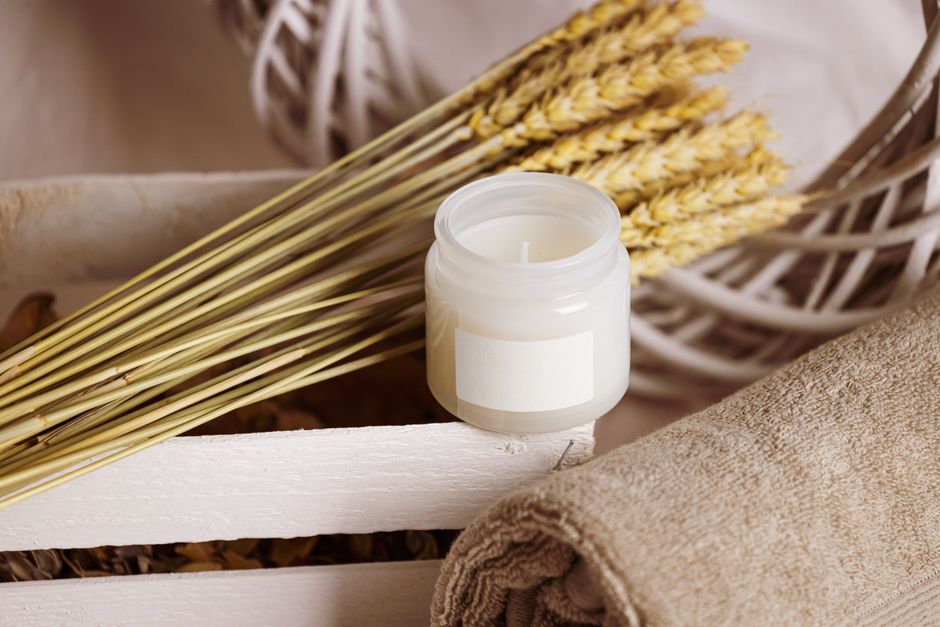
A massage candle looks like an ordinary scented candle, but the resemblance stops at the wick. Instead of hard, high-temperature candle wax, it is built from low-melt plant waxes and butters chosen precisely because they liquefy just above body temperature. You light it, let it pool for a few minutes, blow it out, then pour that warm liquid into your palm and use it as a massage oil.
The clever part is the melting point. Ordinary paraffin or beeswax melts far too hot to touch. Soy wax, on the other hand, becomes liquid around 45 to 50°C, warm enough to feel comforting, gentle enough to sit in your hand. Add shea or cocoa butter and a nourishing oil like jojoba or sweet almond, and what pools in the jar behaves more like a rich, warm lotion than like wax at all.
Quick reassurance. If a candle is truly designed for the skin, the label will say so and list its waxes and butters. A regular scented candle is not a massage candle, and pouring one on skin can burn. When in doubt, it is a room candle, not a body one.
Massage candle vs classic massage oil
People often ask whether a candle is really better than simply reaching for a bottle. Honestly, both are lovely, and they do slightly different jobs. The candle brings warmth and ritual; a classic oil brings simplicity and control. Here is how they compare.
| Massage candle | Classic massage oil | |
|---|---|---|
| Warmth | Gently warm on contact, the main appeal | Room temperature unless you warm it first |
| Ritual | Light, wait, dim the room, a built-in mood | Pour and go, no set-up |
| Ease of use | Needs a few minutes and a temperature check | Instant, nothing to test |
| Best for | Slow evenings, a shared moment, gifting | Everyday use, quick relief, larger areas |
| Watch-out | Open flame, temperature to check | Can stain sheets, choose the finish you like |
If you already have a bottle you love, no need to switch. If you want the whole thing to feel like an occasion, the candle earns its place. And if you are still deciding on the base itself, my guide to choosing a massage oil goes deeper on textures and skin types.
Which wax matters most: soy, shea or coconut
The wax and butter blend is the whole story. It decides how warm the oil feels, how it glides, and how your skin feels afterwards. Here is what the common ingredients actually bring, so you can read a label with confidence.
| Ingredient | Melts around | What it brings |
|---|---|---|
| Soy wax | 45 to 50°C | The classic base, low melt point, smooth and skin-safe |
| Coconut wax | Low, gentle | Silky glide, often blended with soy for a softer pool |
| Shea butter | Body warmth | Rich and nourishing, leaves skin soft rather than greasy |
| Cocoa butter | Body warmth | Adds a velvety finish and a subtle natural scent |
| Paraffin / beeswax | Too high | Avoid for the body, melts too hot and can burn |
The takeaway is simple. You want a plant-based blend built on soy or coconut wax, softened with shea or cocoa butter, and topped up with a carrier oil like jojoba. If you spot paraffin or beeswax listed as the main wax, put it back on the shelf for room use.
How to use a massage candle, step by step
This is where most first-timers overthink it. The method is calm and forgiving once you know the rhythm.
- Light and wait. Let the candle burn for about 15 to 20 minutes, until a small pool of liquid forms near the wick. This also lets the scent settle into the room.
- Blow it out. Never pour with the flame lit. Extinguish it fully and set it on a stable, heat-proof surface away from anything flammable.
- Test the temperature. Pour a drop onto your own inner wrist. It should feel pleasantly warm, never sharp. Wait a moment if in doubt.
- Pour a little. Tip a small amount into your palm, rub your hands together, and apply with slow, broad strokes.
- Keep to safe zones. Back, shoulders, arms, legs and feet. Stay away from intimate areas and mucous membranes, which are far too sensitive for warm wax.
Good habit. Trim the wick to about 5 mm before each session. A tidy wooden or cotton wick burns cleaner, pools evenly, and keeps the oil at a gentle, predictable warmth.
The temperature question, handled calmly
Warmth is the point, so let us be precise about it rather than nervous. A well-made candle pools at a temperature that feels like a warm bath on the wrist, comforting and slightly indulgent. It should never make you flinch. If it does, the wax is either too hot straight from the flame or the candle is not a body-safe one.
Burn precaution. Always test on your inner wrist before touching a partner, and pour from a low height to avoid splashes. Keep away from thin or broken skin, and never use a massage candle on children, on irritated skin, or if you have a skin condition without checking with a professional first.
One more honest note: warmth fades fast. The oil cools within a minute of leaving the jar, so you are working with comfortable warmth, not lingering heat. That is exactly how it should be.
How to choose a good massage candle
A pretty jar tells you nothing. Turn it over and read. Here is my short checklist, the same one I used behind the counter.
- Plant-based wax first. Soy or coconut at the top of the list, ideally with shea or cocoa butter and a carrier oil.
- No paraffin. Skip anything built on paraffin or beeswax as its main wax, they run too hot for skin.
- Gentle fragrance. A soft, natural scent, not an overpowering perfume. Harsh synthetic fragrance is a common cause of irritation.
- Wooden or cotton wick. Clean-burning and lead-free, no metal core.
- Clear labelling. A brand that states “for the skin” and lists its ingredients has nothing to hide.
Patch test. New scent or sensitive skin? Dab a little oil on your forearm and wait a few hours before a full session. It takes seconds and saves a lot of regret.
Setting the scene for two
A massage candle really shines as a shared ritual. The waiting time, that slow 15 minutes while the wax pools, is not dead time. It is the room dimming, phones going quiet, the day being set down. Warm a towel, put on something unhurried, and let the anticipation do half the work.
Start on the back and shoulders where tension gathers, keep your strokes long and slow, and let the warmth guide the pace. If you want a proper technique to follow rather than improvising, my walk-through of a sensual massage for couples pairs beautifully with a candle. And for more slow-evening ideas, the rest of our wellbeing advice is right here.
Frequently asked questions
Is a massage candle safe to pour on skin?
Yes, when it is made from low-melt plant waxes and butters designed for the body. Soy or coconut wax pools around 45 to 50°C, warm rather than hot. Always test a drop on your inner wrist first, and never use a regular scented candle, which burns far too hot.
Can I use a regular scented candle for massage?
No. Ordinary candles are usually paraffin or beeswax and melt at temperatures that can burn skin. Only use a product clearly labelled as a massage or body candle, with plant waxes and skin-safe ingredients.
How long should I let it burn before use?
Around 15 to 20 minutes, until a small pool of liquid wax forms near the wick. Then blow out the flame, check the temperature on your wrist, and pour a little into your palm.
Where on the body can I use it?
Stick to non-intimate areas: back, shoulders, arms, legs and feet. Avoid intimate zones, mucous membranes, the face, and any broken or irritated skin.
What ingredients should I avoid?
Avoid paraffin and beeswax as the main wax, and steer clear of harsh synthetic fragrance if your skin is sensitive. Look instead for soy or coconut wax, shea or cocoa butter, and a gentle scent.
Does the oil stain sheets?
It can, like most massage oils. Lay down a towel you do not mind washing, and use a modest amount at a time. A little goes a long way.
Ready to choose with confidence?
Discover our independent, tested selections.