How to Choose a Massage Oil: The Practical Guide
Sweet almond, jojoba, coconut or grapeseed? How to choose a massage oil by texture, skin type and safety, with a simple patch test.
7 minread, no fluff
4 oilscompared side by side
24hpatch test before use
Independenttested, no jargon

In short
- A good massage oil glides slowly, sinks in without leaving a greasy film, and suits your skin type.
- Sweet almond, jojoba, fractionated coconut and grapeseed all behave differently, so choose by texture and skin sensitivity.
- Vegetable oils weaken latex condoms, so never combine a massage oil with latex barrier protection.
- Always patch test a new oil (and any essential oils) 24 hours before a full-body massage.
Back when I was behind the pharmacy counter, the massage oil question always arrived in a whisper. Someone would pick up a bottle, turn it over, put it back, then finally lean in: “Which one actually feels nice, and won’t leave me sticky?” Fair question. Because the wall of pretty bottles never tells you the one thing you want to know, which is how the oil behaves on real skin, once the lights are low and you just want it to work.
So let’s do this properly. Not a list of scents, but the handful of things that genuinely change the experience: glide, absorption, how kind the oil is to sensitive skin, and a couple of safety points nobody puts on the label. By the end you’ll know exactly which bottle to reach for, and why.
What actually makes a good massage oil
Strip away the marketing and a massage oil has one job: to let your hands move over skin without dragging, for long enough that you don’t have to stop and reapply every two minutes. That comes down to slip (how smoothly hands travel) and slip duration (how long that lasts before the oil disappears into the skin).
Everything else is comfort and preference: the scent, whether it feels warm or cool, how easily it washes out of sheets. A pure vegetable oil (also called a carrier oil) covers all of that with a single, honest ingredient. That’s why it’s my default recommendation over synthetic blends loaded with mineral oil and fragrance.
Texture and absorption: the two things you feel first
Think of oils on a scale from rich and slow to light and quick. A richer oil stays on the surface longer, which is what you want for a slow, lingering massage where you’re in no rush. A lighter oil sinks in faster, feels less greasy afterwards, and suits shorter sessions or skin that hates a heavy finish.
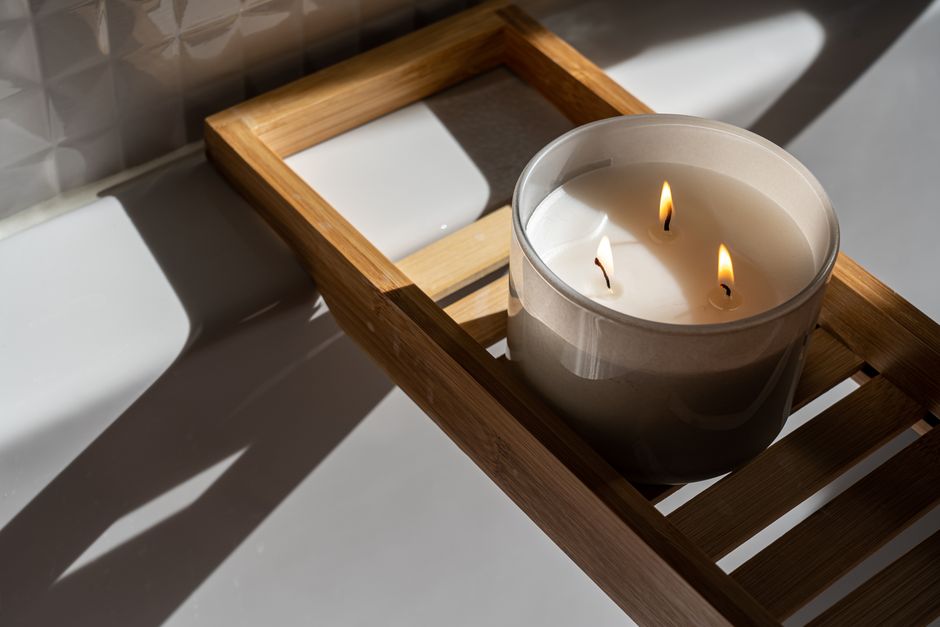
There’s no “best” here, only what fits the moment. If you’re planning a proper unhurried evening, lean rich. If you want to slip back into clothes soon after, lean light. And if you’d rather skip the bottle entirely for something that doubles as ambience, a warm massage candle melts into a low-temperature oil you pour straight from the flame.
Warm it in your palms. Pour a coin-sized amount into your hands and rub them together for a few seconds before contact. Cold oil straight from the bottle makes anyone flinch, and warm oil glides better.
The four carrier oils, compared
These four are the classics, the ones worth knowing before you spend a penny. Here’s how they actually differ on the skin.
| Oil | Texture and glide | Absorption | Best for | Watch out |
|---|---|---|---|---|
| Sweet almond | Rich, long slip | Slow, stays on the surface | Long, unhurried massages | Tree-nut allergy risk |
| Jojoba | Silky, medium slip | Moderate, non-greasy finish | Sensitive or acne-prone skin | Pricier per bottle |
| Fractionated coconut | Smooth, medium slip | Fairly quick, light feel | Odourless base, long shelf life | Can feel too “dry” for some |
| Grapeseed | Light, shorter slip | Fast, barely-there finish | Quick sessions, oily skin | Reapply more often |
My honest shortcut: if you want one bottle that pleases almost everyone, jojoba is the safe, versatile pick. If you love a slow, rich glide and no one in the room has a nut allergy, sweet almond is gorgeous. Want odourless and practically indestructible on the shelf? Fractionated coconut.
Sensitive skin, nut allergies and what to watch for
If your skin reacts easily, keep the ingredient list boring: a single cold-pressed vegetable oil, no added fragrance, no essential oils to start. Jojoba is technically a liquid wax that’s close to the skin’s own sebum, which is why it tends to sit so well on reactive or breakout-prone skin.
The one to flag out loud is sweet almond. It’s a tree nut, so if you or your partner has a nut allergy, skip it entirely and reach for jojoba, coconut or grapeseed instead. This isn’t a “probably fine” situation, it’s a hard no.
Allergies and irritation. If you have a known tree-nut allergy, avoid almond-based oils completely. And if any oil brings on redness, itching or a rash, stop and rinse with lukewarm water. Persistent reactions deserve a chat with a pharmacist or doctor.
Essential oils: lovely, but handle with care
A few drops of a scented essential oil can turn a plain carrier oil into something that smells like a spa. Tempting, and completely doable, as long as you respect two rules. First, essential oils are never used neat on skin, they’re always diluted into a carrier at a low concentration. Second, some are simply not suited to intimate areas or sensitive skin, so keep scented blends to backs, shoulders and legs.
If you’re pregnant, breastfeeding, or managing a health condition, treat essential oils as something to clear with a professional first rather than experiment with. When in doubt, an unscented carrier oil gives you all the glide with none of the guesswork.
The condom question nobody puts on the label
Here’s the point that gets left out of every glossy oil ad, and it matters. Vegetable oils degrade latex. If a massage is going to lead somewhere and you rely on a latex condom, oil on the skin can weaken that latex and make it more likely to fail. The two don’t mix, full stop.
So keep the roles separate: a vegetable oil is for the massage part, not for use with latex barrier protection. If barrier protection is part of the evening, choose a water-based or silicone-based product designed for that purpose instead, and keep the massage oil to the shoulders-and-back chapter.
Oil and latex don’t mix. Any vegetable oil can weaken latex condoms and make them more likely to break. Never use a massage oil as a lubricant with latex barrier protection.
How to patch test in under a minute
Every new oil earns a quick trial before it touches large areas of skin. It takes seconds and saves you a ruined evening.
- Dab a small amount on the inside of your forearm.
- Leave it for 24 hours and don’t wash the spot straight away.
- Check for redness, itching, warmth or any bumps.
- No reaction? You’re good to go. Any reaction? Bin that oil and try a gentler single-ingredient option.
Good habit. Patch test not just the carrier oil but any scented blend too. New oils, new season, new skin sensitivities: a 24-hour test is the cheapest insurance there is.
Storing your oil and making it part of the moment
Vegetable oils don’t love heat and light. Keep the bottle somewhere cool and dark, screw the cap on tight, and use a clean pump or pour rather than dipping fingers in and out. Grapeseed and almond turn faster than jojoba or fractionated coconut, so buy sizes you’ll actually get through in a few months.
And once you’ve found your bottle, the rest is atmosphere and unhurried hands. If you want to turn it into a proper shared ritual, our guide to a sensual massage for couples walks you through the setting, the pace and the simplest moves. For more calm, practical reads like this one, the whole advice section is right here.
Frequently asked questions
Which massage oil is best for sensitive skin?
Jojoba is the gentle all-rounder because it sits close to the skin’s own sebum and rarely irritates. Stick to a single, unscented, cold-pressed oil and patch test it for 24 hours before a full massage.
Can I use a massage oil with condoms?
No, not with latex condoms. Vegetable oils weaken latex and make it more likely to break. Keep the massage oil for the massage, and if barrier protection is involved, use a product specifically made to be compatible with it.
What is the difference between a light and a rich massage oil?
A rich oil like sweet almond stays on the surface longer for slow, lingering massages. A light oil like grapeseed absorbs quickly and leaves less residue, which suits shorter sessions or skin that dislikes a greasy finish.
Are essential oils safe to add to a massage oil?
They can be, but only heavily diluted into a carrier oil and kept to non-intimate areas like the back and shoulders. If you are pregnant, breastfeeding or have a health condition, check with a professional first, or simply use an unscented carrier oil.
How do I patch test a new oil?
Dab a little on the inside of your forearm, leave it 24 hours, then check for redness, itching or bumps. No reaction means you’re clear to use it more widely.
Is coconut oil good for massage?
Fractionated coconut oil works well: it stays liquid, is virtually odourless and has a long shelf life. Some people find it feels slightly dry compared with richer oils, so it comes down to personal preference.
Ready to choose with confidence?
Discover our independent, tested selections.