
How to Use Kegel Balls: A Safe, Step-by-Step Guide
How to use Kegel balls safely: what they can do for your pelvic floor, step-by-step insertion, how long to wear them, cleaning, and when to wait or skip them.

23trials on vaginal weights pooled in a Cochrane review
3 monthsof pelvic floor training before judging results, says the NHS
6 weeksminimum after childbirth, with medical clearance
In short
- Kegel balls are small weights your pelvic floor holds in place: they support Kegel exercises, they do not replace them.
- Research focuses on stress urinary incontinence, and the results are still cautious.
- Start with the lightest weight for a few minutes, and only build up if it stays comfortable.
- Wash before and after, use a water-based lube, and never wear them all day.
- Pregnant, recently postpartum, infection, prolapse or pelvic pain: check with a professional first.
So you’ve got a set of Kegel balls, two smooth spheres joined by a little cord, and now you’re staring at the box wondering where to begin. Learning how to use Kegel balls is easy once you know three things: what they can realistically do, how long to keep them in, and when it’s smarter to wait. This guide brings together what the research and pelvic floor specialists actually say, without the hype.
Still choosing a set? Have a look at our pick of the best Kegel balls by weight and material first: the right starting weight makes all the difference.
What are Kegel balls actually for?
Kegel balls, also called Ben Wa balls or vaginal weights, sit inside the vagina. To keep them there, your pelvic floor muscles contract almost automatically. The idea is gentle strength training for your pelvic floor while you walk around or go about your day.
Most of the research looks at their medical cousin, the weighted vaginal cone, used for stress urinary incontinence. A 2013 Cochrane review pooled 23 trials and 1,806 women. The authors found cones worked better than no treatment and may be similar to pelvic floor muscle training or electrical stimulation. They stay cautious, though: the trials were small, and some women find vaginal weights unpleasant or difficult to use.
The NHS lists vaginal cones as one option that may help with stress or mixed urinary incontinence, while noting that some women find them uncomfortable. As for better sensations and pleasure, the claims on product pages are not backed by comparable trials. You may enjoy them for that, but it isn’t proven.
Kegel balls and your pelvic floor: what they really do
Your pelvic floor is a hammock of muscles that supports your bladder, uterus and bowel. Like any muscle, it gets stronger when it works against resistance, and the ball provides exactly that: a light weight your muscles hold without you thinking about it.
They won’t do the work for you. The foundation is still learning to contract and relax your pelvic floor on purpose. The NHS recommends at least 8 contractions, at least 3 times a day, for at least 3 months before you judge the results.
One common mistake is clenching as hard as you can so they don’t slip. You want a relaxed hold with normal breathing. Hinge Health’s physical therapist also warns that overuse can leave the muscles too tight and uncomfortable.
Before your first time: choose and prepare
The right set for beginners
- Lightest weight first: Hinge Health, a digital physical therapy provider, advises starting with the lightest weight in your set.
- A single ball if your set allows it, before moving to a double.
- A sturdy removal cord and a smooth, easy-to-clean material such as body-safe silicone.
Pick the right lube
A small amount of water-based lubricant makes insertion easier. Skip silicone lube on silicone balls, as it can damage the surface.
How to use Kegel balls, step by step
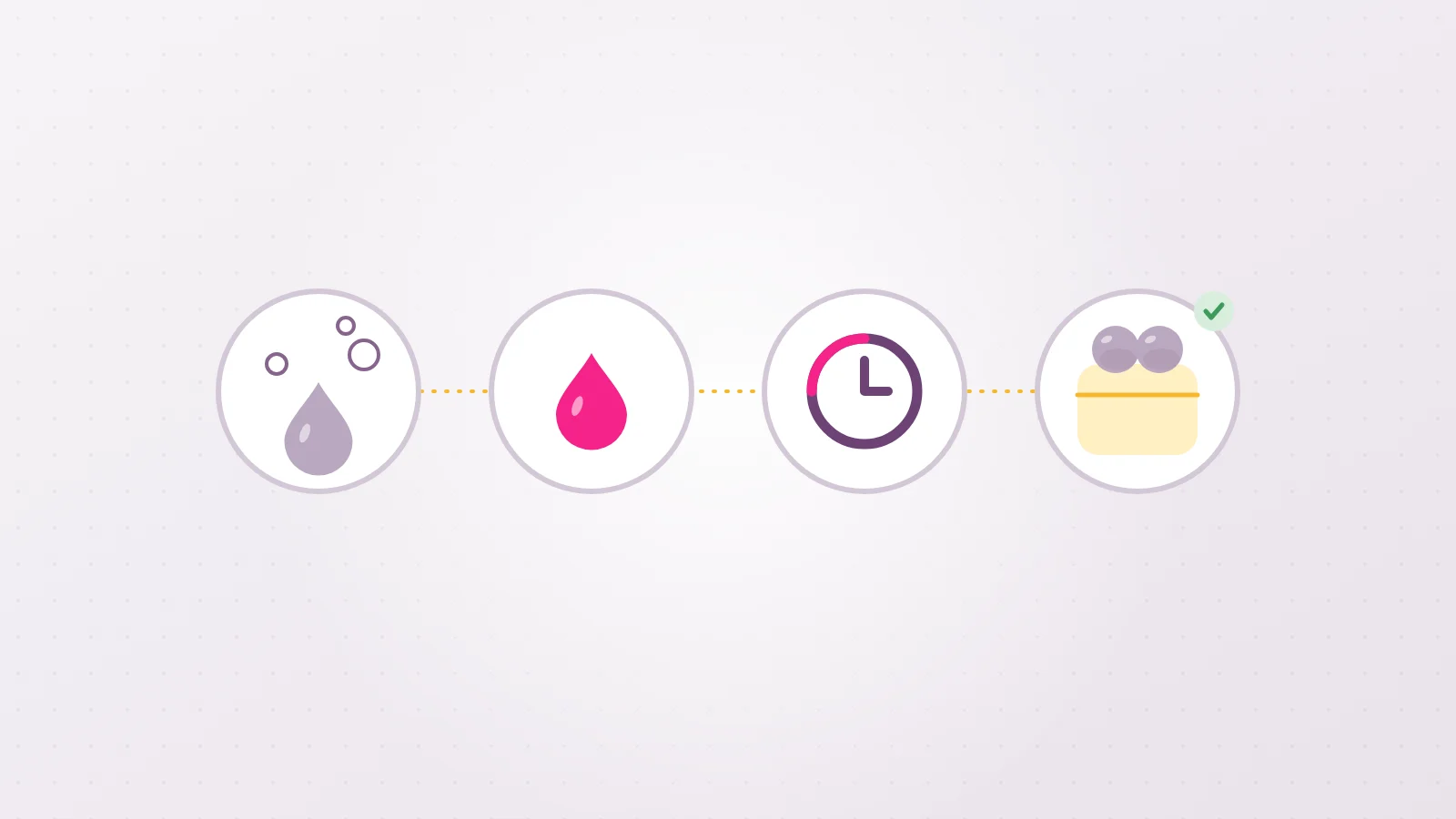
Pick a quiet moment for your first try. There is no rush.
- Prepare: empty your bladder, wash your hands, then wash the balls with warm water and mild soap.
- Lubricate: a few drops of water-based lube on the ball.
- Get comfortable: lying down with your knees bent, or standing with one foot on a chair.
- Insert gently, much like a tampon, breathing out and relaxing your pelvic floor. Leave the cord outside.
- Check in: when they sit well, you shouldn’t feel discomfort. Any pain means you stop.
- Move as usual: walk, tidy up, cook. No need to squeeze the whole time.
- Remove them in the same position, relaxed, by gently pulling the cord.
- Wash and dry them, then store them somewhere clean and dry.
Good to know
If insertion feels painful or difficult, don’t push through. Hinge Health advises stopping and talking to your pelvic floor physical therapist: pain on insertion deserves a check.
How long should you wear Kegel balls?
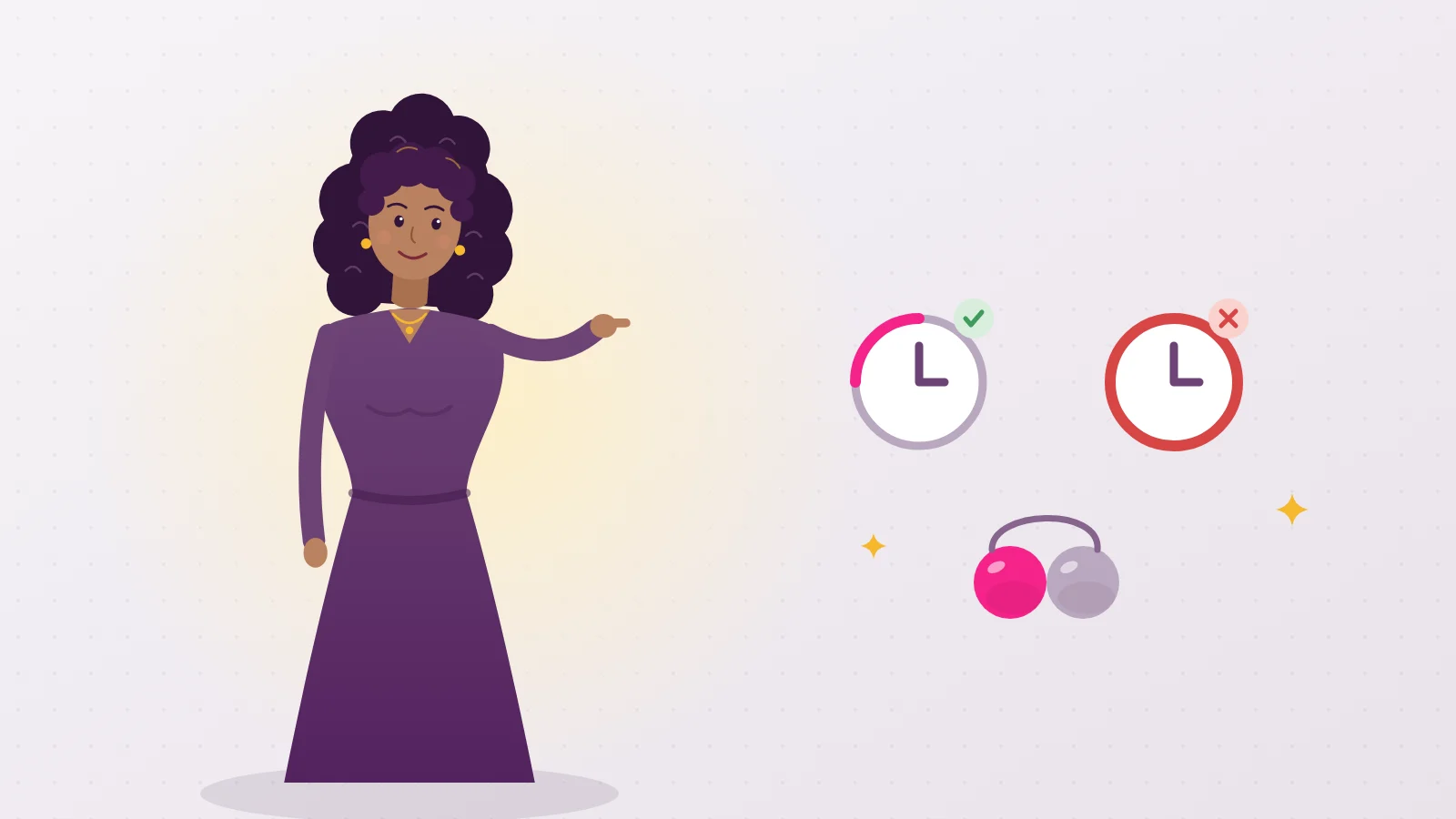
This is the question everyone asks. Guidance varies, but it all points the same way: short, regular sessions.
| Stage | What the guidance says |
|---|---|
| First sessions | a few minutes, going about your day (Hinge Health) |
| Building up | around 15 to 20 minutes per session, only if comfortable (Hinge Health) |
| Overall programme | pelvic floor work for at least 3 months before judging results (NHS) |
| All day or overnight | not recommended: overuse can leave the muscles tight and sore |
Start small, build up in steps only if you feel no discomfort or fatigue, and leave rest days in between. If you notice heaviness, pain, or the balls starting to slip, the session is over.
How to progress safely
There are two levers, and you use them one at a time:
- Position: Hinge Health suggests progressing from lying down, to sitting, to standing.
- Weight: only move up once the current weight feels comfortable, ideally on a professional’s advice.
Keep your regular Kegel routine going alongside. The balls are one more tool to add variety and help you stay consistent.
When to wait or skip them
A pelvic floor check before you start is never a bad idea. Guidance from Hinge Health and from the pelvic floor brand Perifit points to these situations where you should get advice first:
- Pregnancy: not recommended unless your healthcare provider has specifically cleared you.
- After childbirth: wait at least six weeks and get approval from your OB-GYN and physical therapist.
- Active infection: yeast infection, UTI or STI, wait until it has cleared.
- Pelvic rest prescribed after surgery, or a significant prolapse.
- Unexplained pelvic pain or tightness: muscles that are already too tense can get worse with weights.
After a birth, proper pelvic floor rehabilitation with a specialist comes first. The balls can come later, once you have the all-clear.
See a professional
Leaking, a feeling of heaviness, pain during sex or on insertion: talk to your doctor, midwife or a pelvic floor physical therapist before using Kegel balls. These signs deserve a proper assessment.
The bottom line
Used well, Kegel balls are a small boost for a pelvic floor that is already training. A light weight, short sessions, careful cleaning and listening to your body do most of the work. Consistency does the rest. To compare sets before you buy, head back to our Kegel ball buying guide, and find more in our well-being section.
FAQ
How long should I wear Kegel balls the first time?
Only a few minutes. Pelvic floor physical therapist guidance published by Hinge Health suggests a few minutes per session at first, building up to around 15 to 20 minutes if it feels comfortable. Wearing them all day is not recommended.
Can I walk around with Kegel balls?
Yes, that is how most people use them: everyday movement gives the pelvic floor a gentle reason to work. If they slip or feel uncomfortable, take them out and try a shorter session or a lighter weight later.
Are Kegel balls better than Kegel exercises?
Not according to the evidence. A Cochrane review of vaginal weights found no clear advantage over pelvic floor muscle training. Think of them as an add-on to a regular exercise routine.
When can I use Kegel balls after giving birth?
Not before your postnatal check. Hinge Health’s physical therapist advises waiting at least six weeks and getting the green light from your OB-GYN and your pelvic floor physical therapist.
Can I sleep with Kegel balls in?
It is better not to. Published guidance favours short, regular sessions, and a pelvic floor that works all night gets tired with no proven benefit.