
Spooning Position: Benefits, Comfort Tips and Sleeping Well Together
Spooning feels warm and safe, but it can leave you with a numb arm. What research says, the real downsides, and simple tweaks to spoon comfortably all night.
~10%more REM sleep in couples who shared a bed, in a 2020 lab study
59women studied: more frequent hugs, lower resting blood pressure
101couples followed: more affection after intimacy, more satisfaction
In short
- Spooning means lying on your sides, facing the same way, one partner tucked behind the other.
- No study isolates spooning, but touch and bed-sharing are linked with better sleep and lower blood pressure.
- Its downsides are well known: a numb arm, overheating, a sore neck.
- A well-placed pillow, a cushion between the knees and permission to roll apart make all the difference.
Lights off, and before you know it you’re curled up together, chest to back. For many couples, spooning is the default way to fall asleep. It feels safe and warm, yet plenty of people wake up with a dead arm or far too hot. So is it worth trying to spoon all night? Here’s what we actually know about its benefits, its drawbacks and the small changes that make it comfortable.
What is the spooning position?
In the spooning position, both partners lie on their sides facing the same direction, fitted together like two spoons in a drawer. The person behind, the big spoon, wraps an arm around their partner. The little spoon is in front, held.
The roles have nothing to do with height or gender. Being the little spoon is about letting yourself be held; being the big spoon is about holding someone close and feeling them breathe. Lots of couples swap from night to night, which is a lovely habit: you both get to enjoy each side.
Spooning is mostly about drifting off, but it also sets the scene for more playful moments. If you like making those moments last, our pick of toys designed to share as a couple focuses on discreet, beginner-friendly options.
What research says about touch at night
Let’s be straight with you: no study has compared spooning with other sleep positions. The Sleep Foundation says researchers have yet to identify the best cuddling position for sleep. What we do know comes from studies on touch and on sharing a bed.
Sharing a bed and REM sleep
A German team had 12 couples sleep in a lab, one weekend alone and one together. Their 2020 paper in Frontiers in Psychiatry found about 10% more REM sleep when partners shared a bed, with less fragmented REM. Their sleep stages were also more in sync, especially when partners rated their relationship as deep. It’s a small sample, and the study looked at bed-sharing in general, not at any particular position.
Touch, oxytocin and blood pressure
Physical touch boosts the release of oxytocin, a hormone linked to bonding that can lower stress responses, the Sleep Foundation explains. In a 2005 study in Biological Psychology, 59 women spent some warm time with their partner, ending with a hug. Those who reported more frequent hugs had lower resting blood pressure, and higher oxytocin went with lower blood pressure and heart rate. That’s an association: it doesn’t prove that a night of spooning lowers your blood pressure.
A little extra warmth
This is the simplest perk. The Sleep Foundation notes that spooning may provide extra warmth for people who tend to get cold at night. For one partner, that’s bliss. For the other, it can be where the trouble starts.
The downsides nobody mentions
Spooning has a few quirks most couples discover quickly. Knowing them helps you avoid reading anything into ending up on separate sides of the bed.
- The dead arm. The big spoon’s lower arm ends up under their partner’s head or body and starts tingling.
- Overheating. Two bodies under one duvet, and someone starts to sweat. The Sleep Foundation suggests hot sleepers keep a little extra space.
- A sore neck. The little spoon’s head can end up badly supported, especially when sharing a pillow.
- Movement. When one of you shifts, the other feels it. Light sleepers notice fast.
Pins and needles that keep coming back: the NHS explains that pins and needles usually come from sitting or sleeping on part of your body and pass within minutes once the pressure is off. If they keep returning or last a long time, check in with your doctor.
How to sleep well while spooning
A few tweaks let you enjoy spooning without waking up stiff.
- Lower arm under the pillow. The big spoon slides their arm under their partner’s pillow or tucks it in front, rather than under their head.
- One pillow each. Both heads stay supported and the little spoon’s neck gets a break.
- A small cushion between the knees. Many side sleepers find it more comfortable for the hips.
- A lighter duvet, or two. Shared warmth becomes a plus instead of a problem.
- Cuddle at bedtime, then your own space. A few minutes curled up before sleep keeps the best of touch without the downsides.
Tip: switch roles from one night to the next. Whoever had the numb arm last night gets to be held tonight.
Spooning variations when classic spooning doesn’t work
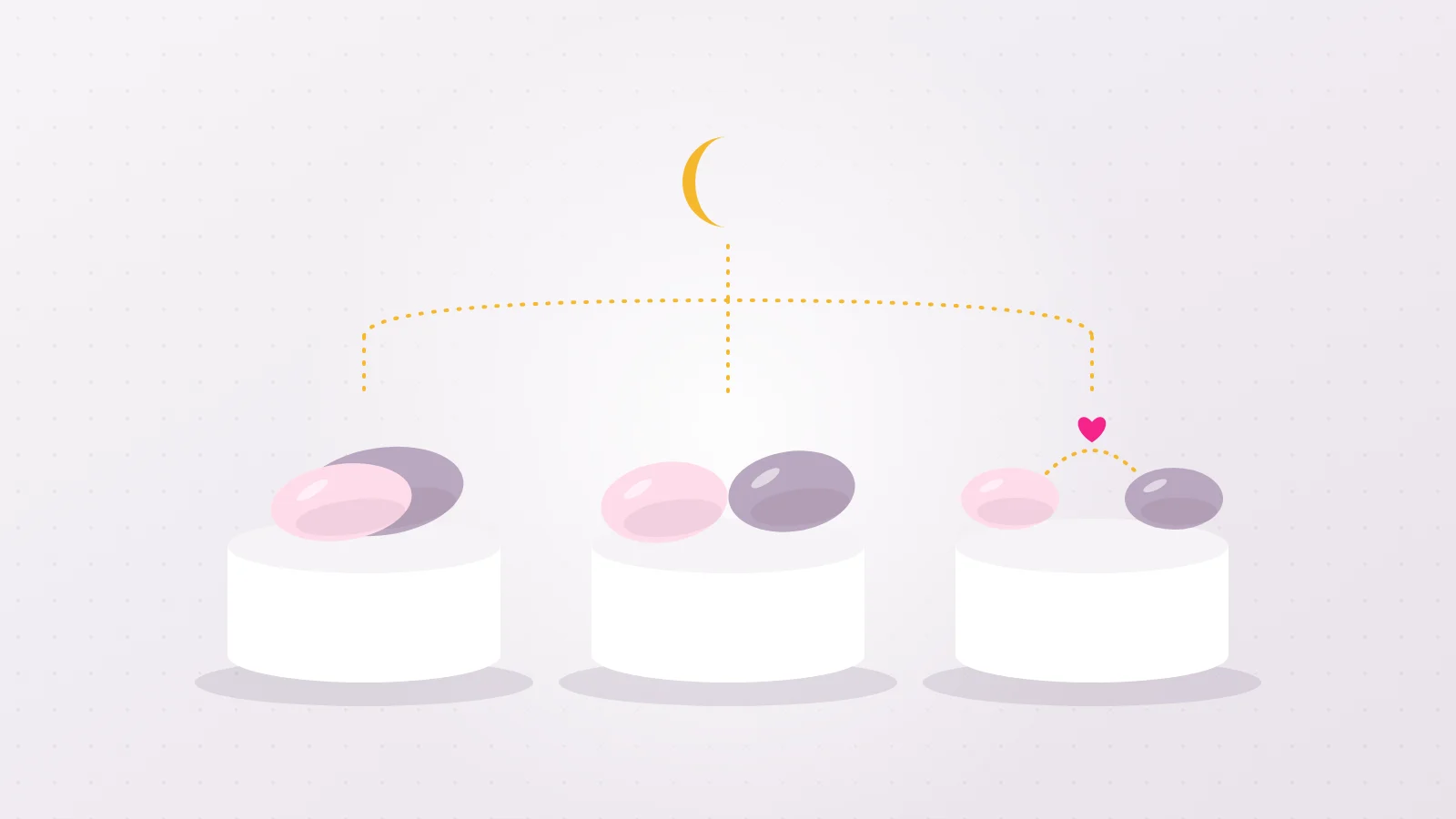
Classic tight spooning is just one option. Depending on the season, how tired you are or how you sleep, a looser version often works better.
| Variation | How it works | Best for |
|---|---|---|
| Classic spooning | Pressed together, the big spoon’s arm around the little spoon | Falling asleep, cooler nights |
| Loose spooning | Same direction, a small gap between you | Hot sleepers and restless sleepers |
| Back to back | Each on your own side, backs touching | Staying in touch without crowding |
| Just a touch | A hand, a foot or a leg resting against your partner | People who need space to sleep |
The Sleep Foundation guide to cuddling positions also suggests cuddling before bed, then moving into your own positions if staying wrapped up becomes uncomfortable. A simple point of contact is often enough to feel close.
Spooning beyond sleep
Spooning is a tender position long before it’s a sleep position. It leaves your hands free for slow strokes along the shoulders, back or arms, those often-overlooked sensitive areas. There’s no eye contact to hold, and many people find that reassuring.
It matters after intimacy too. Research published in 2014 in Archives of Sexual Behavior followed 101 couples day to day. When affection after sex, such as cuddling, lasted longer and felt better, both partners reported more sexual and relationship satisfaction. Spooning is one of the easiest ways to stretch that moment out. If that idea speaks to you, slowing down together with slow sex builds on the same principle: taking your time.
When one of you loves spooning and the other doesn’t
Sometimes one partner loves falling asleep wrapped up and the other needs room to drift off. That’s not rejection. Everyone has their own body temperature, sleep style and need for space, and sometimes an ache they haven’t mentioned.
Touch doesn’t carry the same weight for everyone. For some people it’s the clearest sign of love, as the love languages model and its physical touch category describes. Others show love in different ways. Talking about it calmly, outside the bedroom, heads off a lot of hurt feelings.
Good habit: agree on a ritual that suits you both, like spooning while you catch up on your day, then settling into your own space. If the distance is showing up beyond the bed, our advice on feeling close again as a couple can help.
The bottom line
Spooning isn’t magic, but it gives you a moment of warmth and closeness many couples look forward to every night. Treat it as a way to fall asleep rather than an all-night commitment, sort out your pillows, take turns being the big spoon, and give yourselves permission to roll apart. You’ll find more ideas for your relationship in our couples section.
Spooning FAQ
Who’s the big spoon and who’s the little spoon?
The big spoon lies behind and wraps around their partner, the little spoon lies in front. Nothing ties the roles to height or gender: plenty of couples swap depending on the night and on who wants to be held.
Can you sleep in the spooning position all night?
Some couples do, many drift apart once they fall asleep. The big spoon’s arm goes numb and the shared heat builds up. A cuddle at bedtime, then your own space, is a very common compromise.
Why does my arm go numb when spooning?
Your partner’s weight presses on it. The NHS explains that pins and needles happen when pressure from sitting or sleeping on part of your body affects the nerves, and they usually pass within minutes. If they keep coming back, see a GP.
Does spooning have proven health benefits?
No study looks at spooning on its own. Research links bed-sharing with more REM sleep in couples, and frequent partner hugs with lower blood pressure in women. These are associations, not guarantees.
My partner doesn’t like spooning. Is that a bad sign?
Not at all. Some people sleep badly as soon as they feel hot or touched. Closeness can come from a bedtime cuddle, a hand resting on your partner or a few quiet minutes together before lights out. Look for a kind of contact you both enjoy.